
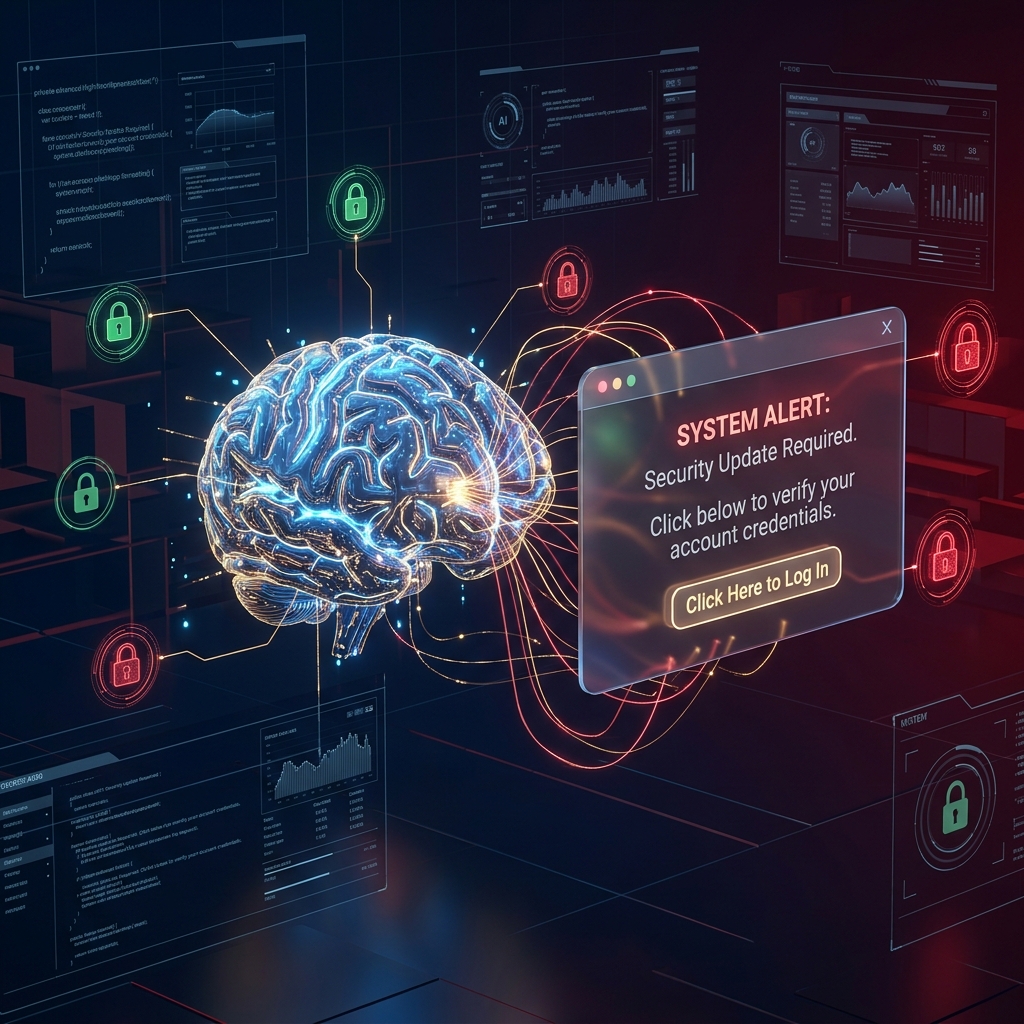
The Nigerian Prince Is Dead. Meet the Algorithm.
For two decades, phishing was almost laughably bad. Broken grammar. Generic urgency. A foreign prince with millions to share if you'd just confirm your bank details. We built spam filters, trained employees to spot the red flags, and mostly kept the flood at bay.
Then generative AI arrived—and in 36 months, that entire defense model became obsolete.
"AI is fueling a golden age of scammers—where every message can be hand-crafted by machines to deceive even vigilant users."
— CISO quoted in StrongestLayer Enterprise Threat Analysis, 2026This isn't an incremental upgrade to old tricks. It's a phase transition—from artisanal fraud to industrial deception. Let's break down how it actually works.
A Normal Tuesday That Changed Everything
The Slack notification arrived at 11:47 PM. Rohit was wrapping up his work from home—three back-to-back meetings, code reviews, a pull request he'd been avoiding. The kind of day that leaves your brain fried, your coffee cold, and your patience thinner than tissue paper. His phone buzzed.
Rohit read it three times. He knew Vikram. Worked with him for two years. Brilliant engineer. Exactly the type to send a late-night Slack asking for a favor. In fact, Rohit had done this before—pulling reports, exporting configs, sending files over secure channels. It was routine.
He didn't think. He just acted.
8 minutes later, a 2.4 MB ZIP file containing AWS access keys, database connection strings, and API tokens sat in Vikram's Slack DM. Then Rohit closed his laptop and went to bed.
He had no idea that everything had just changed.
The Thing That Wasn't Quite Right
The next morning, Rohit woke up with that strange feeling. Not dread. Not alarm. Just... off. He scrolled through Slack while brushing his teeth. Found the message again. Something nagged at him.
Vikram never used emojis.
Rohit had worked with Vikram for 730 days. He'd sent him thousands of Slack messages. Not once had Rohit seen a 🙏 emoji. Vikram was the guy who typed in all caps when annoyed, used zero punctuation, and thought emojis were for "marketing teams."
Rohit called Vikram. "Did you message me last night about AWS credentials?"
There was a pause.
"No. Why?"
That pause. That denial. Those two words turned Rohit's casual Tuesday into a full-blown security incident.
How AI Phishing Really Works
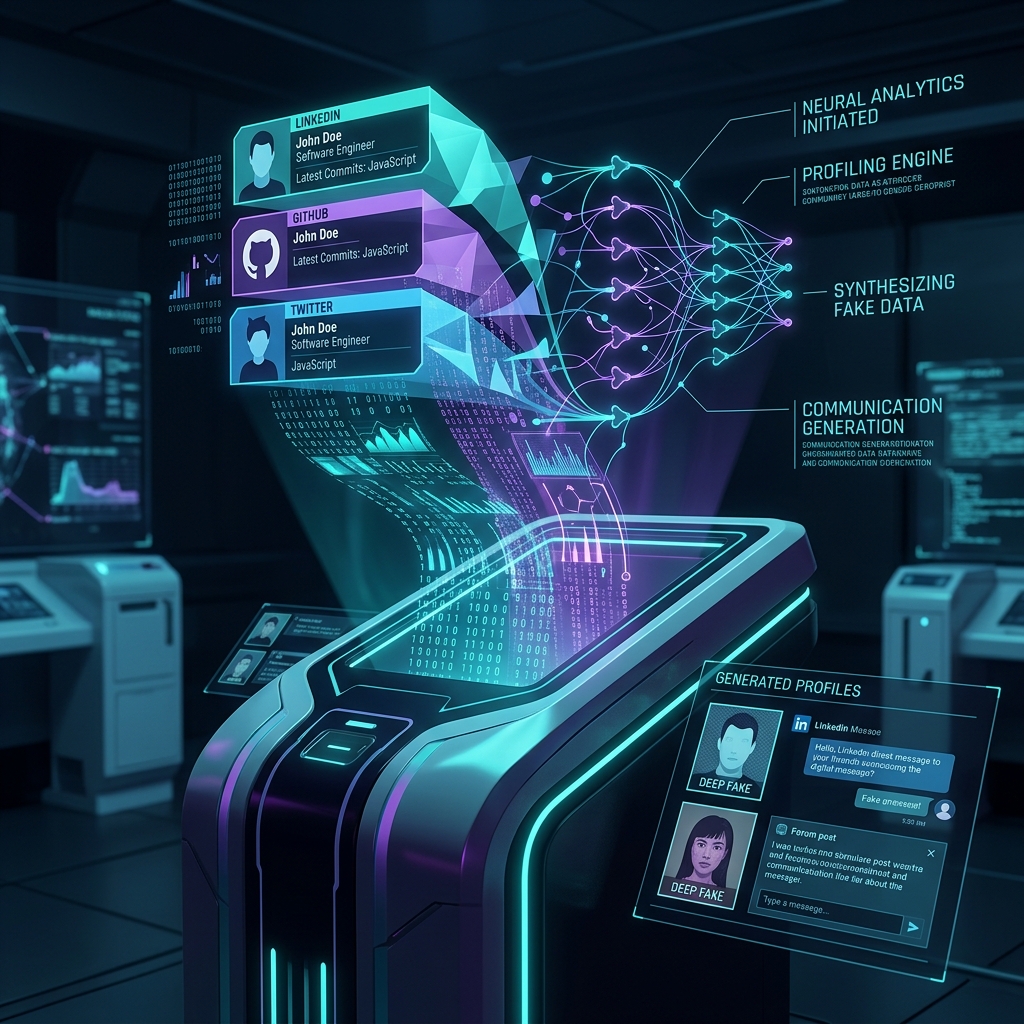
Modern AI phishing is a four-stage automated pipeline. It's not one clever trick—it's a supply chain from intelligence gathering to credential theft, each step powered by a different AI capability.
| Timeline | What the Attackers Did | Data Source |
|---|---|---|
| Sep 15 | Scraped Vikram's LinkedIn profile | Public LinkedIn data |
| Sep 18 | Downloaded Vikram's GitHub commits (code style + communication) | Public GitHub repository |
| Sep 22 | Pulled Vikram's entire Slack history (public channels) | Public Slack screenshots, transcripts |
| Oct 3 | Analyzed Rohit's work patterns and communication with Vikram | Public team interactions |
| Oct 8 | Studied Rohit's response times, decision patterns, stress signals | Slack activity metadata |
| Oct 15 | Built behavioral model + predictive timing algorithm | AI training on collected data |
| Nov 12, 11:47 PM | Sent the perfectly-timed message at decision-fatigue peak | Exploit execution |
What the AI Learned About Rohit (In 8 Weeks)
The attackers didn't need to hack Rohit's account. They just needed his digital footprint. And it was everywhere.
What a Human Attacker Knew
✓ Rohit's name
✓ His job title
✓ His company
✓ His manager (maybe)
What AI Learned
✓ His exact communication style
✓ His trust network (Vikram)
✓ His decision-making weaknesses
✓ His stress triggers
✓ His work patterns (6 AM - 9 PM)
✓ His vulnerability window (11:47 PM)
✓ His emotional state (burnout)
✓ His values (security-conscious)
Why? Because the AI didn't send a generic phishing email. It sent a perfect replica of trust.
Let me break down the psychological engineering in that one message:
What Happened in 6 Hours
After Rohit sent the credentials, the attackers had unfettered access to the company's core infrastructure. And nobody noticed for 6 hours.
| Time | Attacker Action | Detection Status |
|---|---|---|
| 00:08 | Credentials received | — |
| 00:14 | Logged into AWS with Rohit's token | ❌ No alert |
| 00:15 | Created new IAM user (for persistence) | ❌ No alert |
| 00:19 | Extracted database backups | ❌ No alert |
| 00:23 | Accessed customer database (2.1M records) | ❌ No alert |
| 00:31 | Set up reverse tunnel for persistence | ❌ No alert |
| 01:02 | Exfiltrated customer PII data | ❌ No alert |
| 02:17 | Accessed internal documentation | ❌ No alert |
| 03:45 | Discovered finance system credentials | ❌ No alert |
| 04:12 | Pivoted to payment processing database | ❌ No alert |
| 06:00 | Security team finally notices unusual activity | ⚠️ ALERT (6 hours late) |
The Silent Breach Problem: A single compromised credential gave the attackers full access to systems that handle millions of customers. There were no anomaly detection systems. No behavioral alerts. No real-time monitoring. The database wasn't encrypted. The credentials weren't rotated frequently. By the time security noticed, the damage was already done.
The Cost
Total damage from one 7-second decision: $7M+ in direct costs, plus immeasurable reputation damage and loss of customer trust.
It's Not About IQ. It's About Human Psychology.
Here's the uncomfortable truth: Rohit isn't stupid. His IQ is high. He's technically savvy. He knows about phishing.
But he fell for it anyway.
Not because he's incompetent. Because of human psychology—exploited by AI that understands psychology better than we do.
Decision Fatigue (The Brain Overload)
Rohit had made 247 decisions that day. By 11:47 PM, his prefrontal cortex (the part that handles critical thinking) was exhausted. When decision-fatigued, your brain defaults to:
- Trust existing authority figures
- Accept social norms
- Act without questioning
- Follow familiar patterns
The AI knew this. It sent the message at the exact moment Rohit's defenses were lowest.
Authority Bias
Vikram is the VP of Engineering. Rohit's brain is hardwired (by evolution and society) to obey authority. When someone with power asks you for something, your instinct is: "Who am I to question this?"
Consistency Principle
Rohit had pulled AWS credentials for Vikram before. Three times. His brain's logic: "I've done this before. This must be normal. This must be safe."
But "normal" doesn't mean "safe." The AI knew Rohit had a pattern. It fit perfectly into that pattern.
In-Group Bias
Rohit had worked with Vikram for 2 years. They were part of the same team. The same tribe. When someone from your tribe asks for something, your trust threshold drops dramatically.
Urgency + Stress = Broken Brain
"Boss is breathing down my neck"
Three psychological triggers:
Urgency
Bypass thinking, act now
+ Stress
Emotional, not rational
+ Authority
Someone important needs my help
Combined: Rohit's prefrontal cortex was offline. His amygdala (the fear center) was in charge. Fear + loyalty = compliance.
"The defensive paradigm that most enterprises operate under—content-based filtering plus user awareness training—was designed for a world where phishing had detectable red flags. That world no longer exists."
— AutoSPF Research, 2026Traditional Phishing vs AI Phishing 3.0
Here's how dramatically things have changed in just 2 years:
| Metric | Traditional Phishing | AI Phishing 3.0 | Difference |
|---|---|---|---|
| Cost per campaign | $500–$2,000 | $20–$50 | 95% cheaper |
| Time to build | 16+ hours | 5–10 minutes | ~200× faster |
| Click-through rate | ~12% | ~54% | 4.5× higher |
| Grammar/spelling errors | Common—detectable | None—native quality | Evasive |
| Personalization depth | Name + company only | Projects, manager, colleagues, recent activity | Weaponized |
| Filter evasion | Signature-based filters catch ~95% | Evades Gmail, SpamAssassin, Proofpoint | Critical gap |
| Operator skill needed | Moderate technical skill | None—teenagers have done this | Democratized |
Democratization of Attack Capability: In February 2025, three teenagers aged 14, 15, and 16—with no coding background—used ChatGPT to build an attack tool that hit Rakuten Mobile's systems ~220,000 times. They spent the proceeds on gaming consoles and online gambling. The skill floor for running an enterprise-grade phishing campaign has effectively hit zero.
The Dark Web AI Phishing Market
These aren't jailbroken ChatGPT sessions. They're dedicated offensive platforms marketed on dark web forums with pricing tiers, customer support, and feature updates that would embarrass some legitimate SaaS products.
You're Fighting Last Year's War With Last Decade's Tools
The dirty secret: the security stack most enterprises run was architected for a threat model that ceased to exist around 2023. Content-based filtering assumes detectable patterns. User awareness training assumes visible red flags. Neither holds against AI-generated phishing.
- Content-based spam filters: Trained on historical pattern signatures. LLM-rephrased phishing significantly evades Gmail, SpamAssassin, and Proofpoint in independent testing.
- Grammar/spell-check detection: Phishing 1.0's tell. AI generates native-quality prose in any language, tone, and style. 51% of all spam is AI-written as of April 2025.
- "Hover over links" training: Attackers register lookalike domains hours after campaigns launch—and take them down before blocklists catch up. Average lifespan: 4–8 hours.
- Legacy MFA (SMS/TOTP): Carnegie Mellon CISO: "Legacy MFA techniques are now regularly defeated." Real-time MFA interception proxies (Tycoon 2FA, EvilProxy) intercept OTP tokens live.
- Annual phishing simulations: Built for the 2019 threat model. Teach employees to look for generic red flags that AI campaigns don't have.
- Sender domain inspection: PhaaS platforms impersonate 200+ organizations with lookalike infrastructure that passes basic domain checks.
What Actually Works in 2026
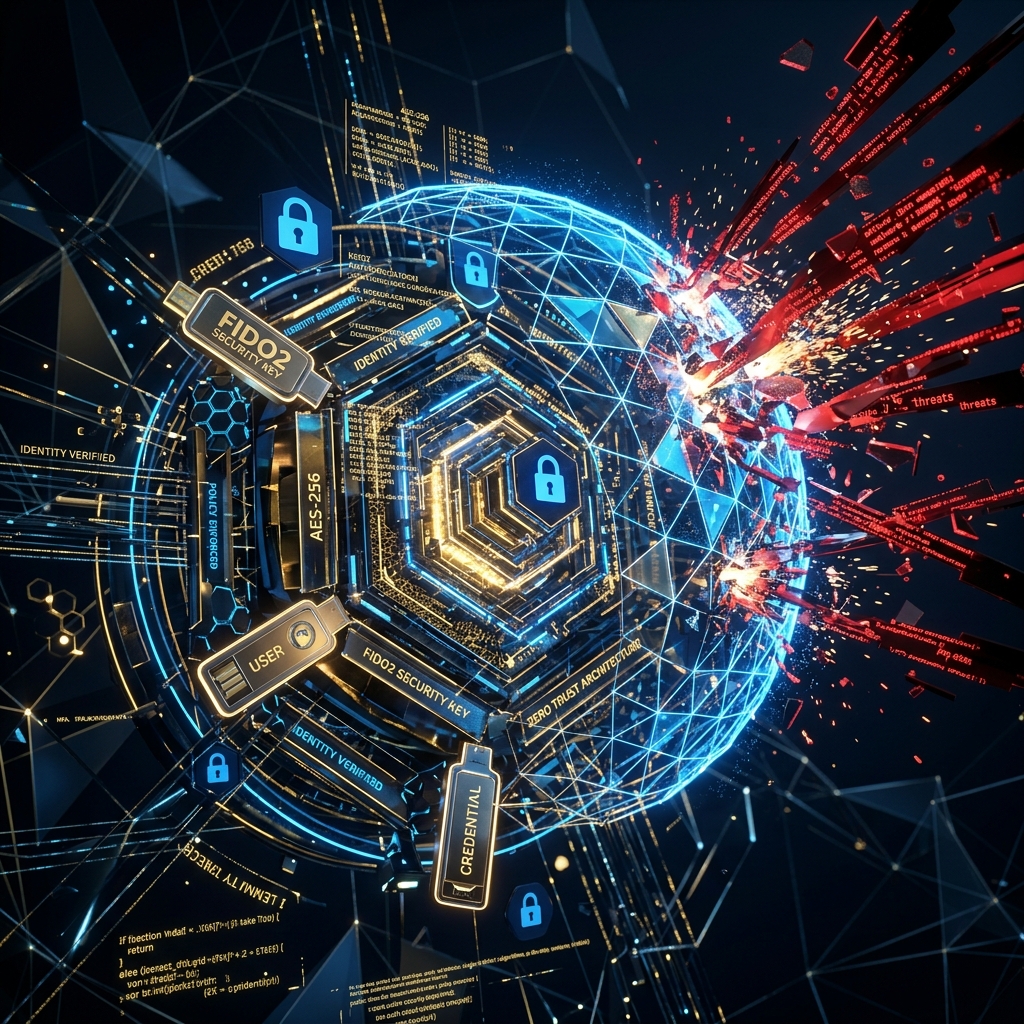
The goal isn't to rebuild the same defenses with slightly better rules. It's to change the fundamental model: stop trusting content signals you can't verify, and start enforcing cryptographic guarantees wherever possible.
The 2026 CISO Action Checklist
- Audit MFA deployment—replace all SMS/TOTP with FIDO2 keys for privileged accounts + finance roles within 90 days.
- Deploy DMARC at p=reject on all owned domains. Check BIMI adoption for brand authentication signals.
- Replace content-signature email filters with behavioral AI platforms analyzing communication relationship graphs.
- Run red team exercise using actual WormGPT-style outputs against your current detection stack—benchmark the gap.
- Update phishing simulation program to include multi-channel attacks: email + follow-up SMS + voice vishing.
- Implement AI Acceptable Use Policy—document which AI tools employees can use, what data can touch external APIs.
- Train finance, HR, executive assistants specifically on voice-clone vishing and deepfake video call fraud.
- Establish out-of-band verification for all wire transfers, payroll changes, M&A communication regardless of source legitimacy.
What Comes Next: Agentic AI Attacks
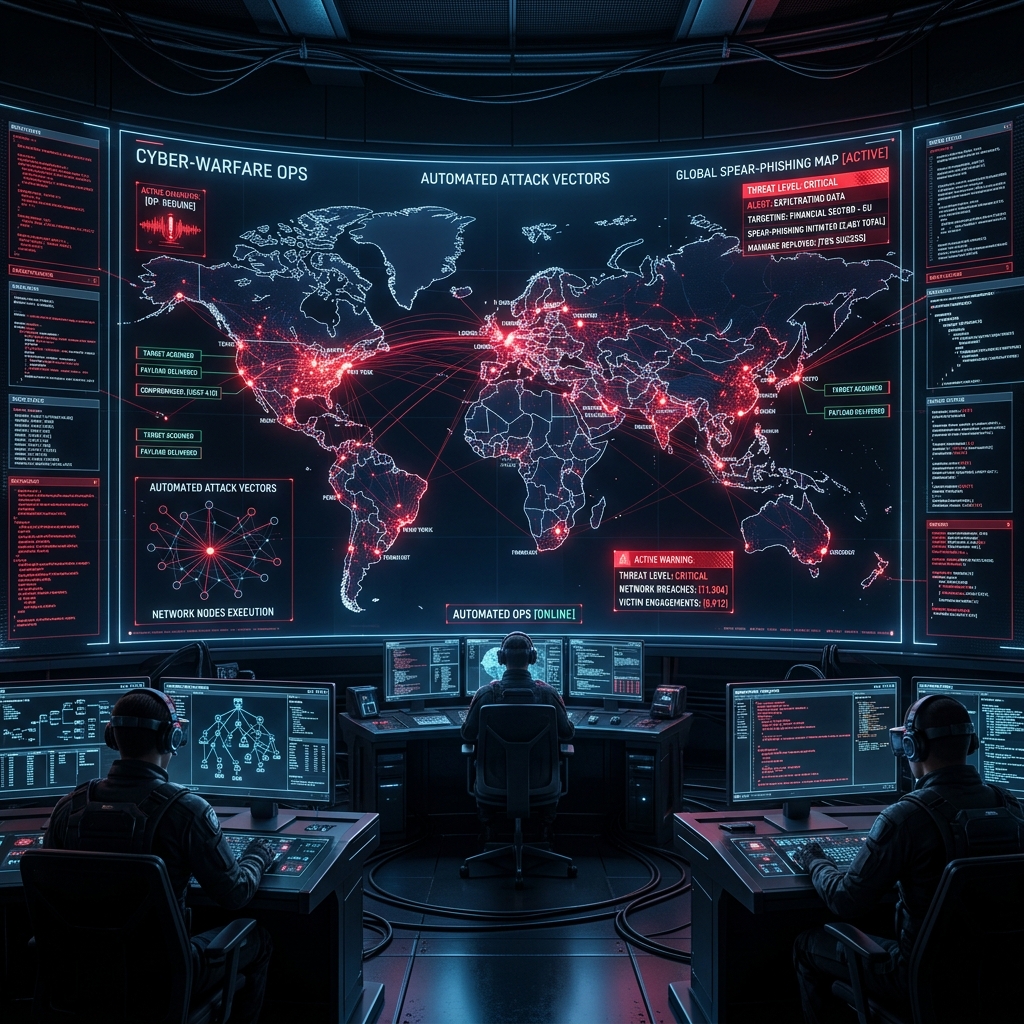
Current AI phishing is still fundamentally reactive: attackers craft a lure, send it, and wait. The next evolution is agentic phishing—where an AI agent conducts the entire campaign autonomously.
Imagine an AI that:
- Researches targets continuously
- Sends initial lures
- Responds to replies in real-time
- Escalates to voice calls when email fails
- Pivots to new channels when blocked
- Maintains campaigns for months without human oversight
The 2027-2028 Threat Forecast
Now – 2026
✓ AI generates lures at scale
✓ Humans manage campaigns
✓ FIDO2 + behavioral detection effective
✓ 84% of security teams report AI phishing harder to detect
2026 – 2027
✓ Agentic campaigns: AI manages entire attack cycle
✓ Real-time deepfake calls become commodity
✓ AI phishing targets AI tools themselves
✓ Agent-to-agent attacks emerge
The Ferrari Defense, Restated: The attempted Ferrari CEO voice-clone attack was stopped by nothing more than a human asking an unexpected question and insisting on a callback. That procedural instinct—verify before acting, regardless of how convincing the source—remains the single most resilient defense against AI social engineering. Technology alone won't save you. Cryptographic authentication (FIDO2) + procedural verification + fast detection is the 2026 stack.
The Human Cost
After the breach was discovered, Rohit was devastated. He wasn't fired—the company understood it wasn't his fault. But the psychological damage was real.
He second-guessed every message. Every request from colleagues felt suspicious. He started verifying everything obsessively. His colleagues noticed. Relationships strained. Work became harder.
He eventually left the company. Not because he was blamed. But because he couldn't trust his own judgment anymore.
This is the human cost of AI phishing.
It's not just data breaches and regulatory fines. It's broken trust. Psychological damage. People leaving careers. And Rohit isn't an outlier. He's the future.
Don't Fight a 2026 Threat With a 2019 Playbook
AI phishing is not a future risk. It's 82.6% of what's hitting your organization's inboxes right now. The defenses exist. The gap is deployment speed.