
Parents Alert: The Secret Gaming Scam Emptying Family UPI Accounts (And How to Spot It)
He saved ₹8,000 over six months — every Diwali gift, every birthday fifty-rupee note carefully tucked away. One fake BGMI tournament notification. Four WhatsApp messages. Four UPI payments. It was gone in under 48 hours. This is the gaming scam no parent is talking about — but every parent needs to hear.
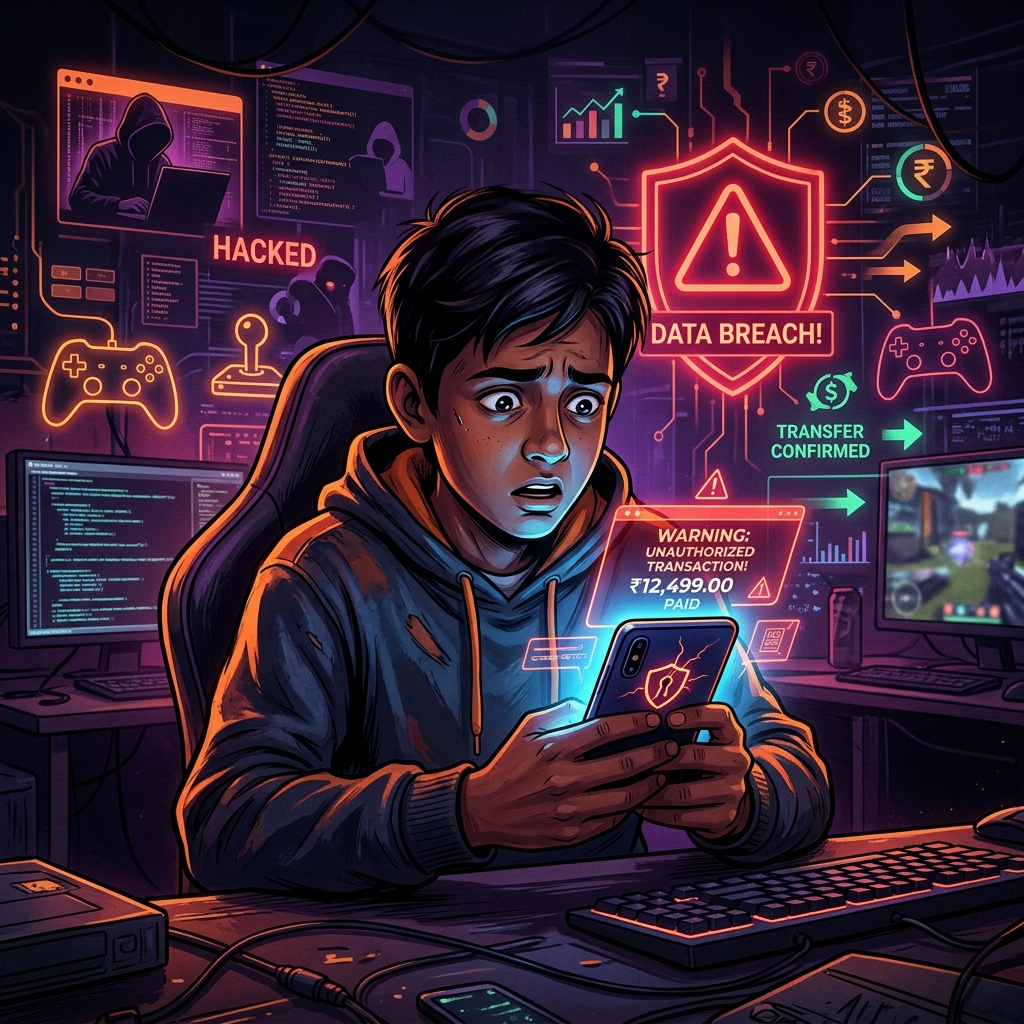
The Day The Gaming App Betrayed Aarav
"He didn't spend money on a random stranger's request. He paid it to claim a prize he had already 'won.' That's what makes this scam so devastatingly effective against children."
Aarav Sharma is 14. Class 9. His favourite subjects are Maths and Computer Science. He wants to be a game developer when he grows up. He plays BGMI — Battlegrounds Mobile India — every evening after finishing homework, sometimes with school friends in squad matches, sometimes alone.
He's not reckless with money. He's the kind of kid who saves. Every Diwali, every birthday, every time a relative hands him a ₹500 note with a smile, it goes in. A jar under the bed. Then his mum Priya's UPI account after she agreed to keep it safe for him — for "the gaming setup he's been wanting."
By April 2026, that fund stood at ₹8,000. Six months of patient saving.
On a Thursday evening in April, a message arrived in a BGMI players' WhatsApp group he'd been part of for over a year.
"🏆 OFFICIAL BGMI MEGA TOURNAMENT 2026 — Register Now! Win 10,000 UC + ₹5,000 cash prize. Free entry. Limited slots. Click here: bgmi-pro-tournament[.]in — Registration closes in 3 hours!"
The message had the BGMI logo. It was pinned by the group admin. Two other members had already commented: "Registered! Looks legit 🔥" and "Bhai I'm in, see you in the finals."
Aarav clicked. He registered. He filled in his name, phone number, and UPI ID "for prize transfer."
Twenty minutes later, a message came directly to his WhatsApp.
"Congratulations Aarav! You have been selected for the Grand Finals. Your UC prize of ₹10,000 has been locked for you. To release your winnings, a one-time processing fee of ₹200 is required. Pay now to confirm your slot: [UPI link]."
₹200. For a ₹10,000 prize. It felt completely reasonable.
He paid. From his mum's UPI. She didn't notice — she was cooking dinner.
Four Messages. Four Payments. Zero Prize.
This is the part that makes fraud investigators shake their heads in admiration at the cruelty of it. The scam didn't end at ₹200. It had barely begun.
Payment 1 — ₹200 (Processing Fee)
Paid immediately after "winning." Felt like nothing. He'd spent more on a meal at school canteen. The next message came in 10 minutes.
Payment 2 — ₹500 (GST Compliance Fee)
"As per government regulations, gaming prize winnings above ₹5,000 require GST verification. Please pay ₹500 to proceed. This amount will be added to your total winnings." It sounded official. He paid.
Payment 3 — ₹2,000 (Account Verification)
"Your prize transfer has been initiated, but our system flagged your UPI account as unverified. Please pay ₹2,000 refundable deposit to verify. Amount will be returned with prize within 24 hours." He hesitated here. But the "refundable" word reassured him. He paid.
Payment 4 — ₹5,300 (Anti-Fraud Security Bond)
"Final step: Our banking partner requires an Anti-Fraud Security Bond of ₹5,300 before releasing your prize. This is a one-time payment and is fully refundable. After this, ₹18,000 total (prize + deposits) will hit your account." This is where Aarav told his friend on call: "Bhai, ek kaam kar, ₹18,000 ke liye ₹5,000 worth it hai." He paid.
Total paid: ₹8,000. Exact total of his savings. They knew. Because he gave them his UPI ID, they could see his transaction pattern — and they kept extracting until the account was drained.
The OMG Moment
The morning after the final payment, the number was unreachable. The website returned a 404 error. The WhatsApp group admin had deleted the pinned message. "BGMI Official" had blocked him.
Aarav sat on his bed staring at the blank chat screen for fifteen minutes. Then he walked to the kitchen where his mum was making chai.
"Mummy..." long pause. "Mummy, ₹8,000 kaat gaye."
Priya first thought he was joking. Then she saw his face. Then she checked her phone. The bank notifications were all there — four transactions, all confirmed, all to UPI IDs she didn't recognise.
She didn't shout. She sat down. She held his hand. She said one sentence:
"Aarav, tere savings the. Main samajh sakti hoon. Ab batao — kya hua exactly."
That grace is what made him tell her everything. And what made them file a complaint within the hour.
Why Children Are The Easiest Targets For This Scam
Here's what nobody in your family's group chat has told you yet: these scam operations are industrial-scale. They run hundreds of fake tournaments simultaneously. They buy phone number lists of BGMI and Free Fire players. They infiltrate gamer WhatsApp groups. They have scripted conversations ready for every objection a child might raise.
Aarav's ₹8,000 is one data point among thousands. The BGMI fake tournament scam alone has been flagged in cybercrime reports from Karnataka, Maharashtra, Delhi, and West Bengal — yet almost none of the victims are adults. It targets children specifically, because children have fewer defenses.
And here's the cruelest part: the scammers knew Aarav had exactly ₹8,000 saved. Because he gave them his UPI ID at registration, and UPI transaction patterns can reveal rough account balances. They extracted it all — not by accident, but by design.
What The Scammers Know That Your Child Doesn't
The fake tournament scam works because it exploits something that's genuinely true about gaming: tournaments do exist. Real prizes are given out. BGMI does run official events. Scammers layer their operation on top of this legitimate reality.
The key insight: no legitimate gaming tournament, ever, asks you to pay money to receive a prize you've already won.
That's it. That's the rule. If you already "won" and someone asks you to pay to "release" your winnings — it's a scam. 100% of the time. No exceptions.
"But they gave me a receipt!"
Receipts are free to generate. Fake sites show fake receipts.
"But the group admin shared it!"
Group admins are paid ₹500 by scammers to post one message. Or the "admin" is also a fake account they control.
"But it looked exactly like the BGMI website!"
Cloning a website takes 30 minutes. AI can do it faster now.
🛡️ 7 Rules Every Indian Parent Must Set Today
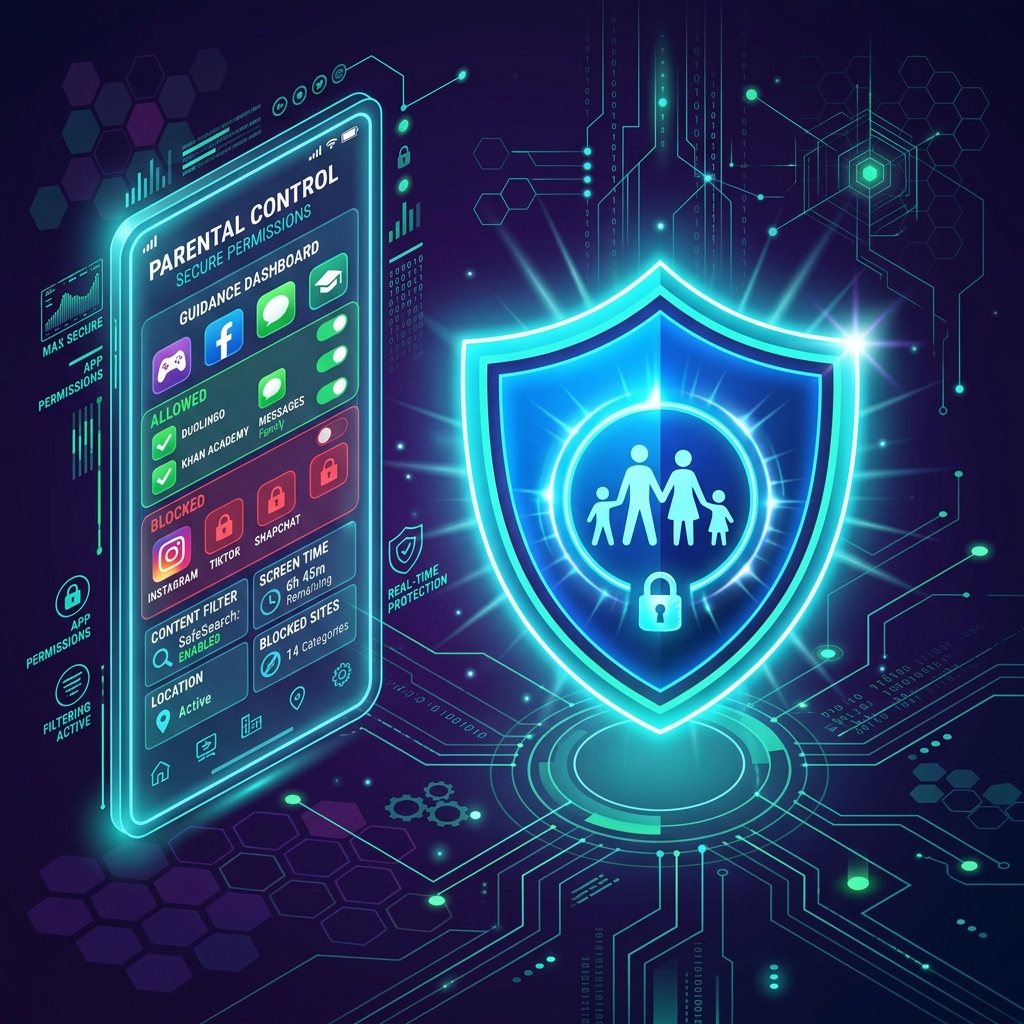
You don't need to take the phone away. You don't need to ban gaming. You just need these seven conversations — once, clearly, with no judgment.
✅ Parent-Child Cyber Safety: Gaming Edition
Set a rule: "No payment without showing Mummy/Papa first"
Any request for payment — even ₹10 — must be shown to you first. Make this a non-negotiable household rule, not a punishment. Frame it as: "I trust you. I just want to help you spot scams." This single rule stops 90% of gaming scams cold.
Explain the "Pay to claim a prize" rule — zero exceptions
Sit with your child and say clearly: "If you've already won a prize, you will NEVER be asked to pay money to receive it. If someone asks you to pay — it's a scam. Tell me immediately." Practice this out loud until they can say it back to you.
Don't keep UPI logged into the family/child's shared phone
If your child uses a phone where your PhonePe or Google Pay is active, log out or use a separate UPI PIN they don't know. Or set up a UPI with a low-balance account specifically for small transactions. Don't give children passive access to your main bank account's UPI.
Check your bank SMS alerts — and check them daily
Enable SMS alerts for every transaction, no minimum amount. Aarav's scam happened across two days. If Priya had checked her phone notifications the evening of the first payment, she would have caught it at ₹200 — not ₹8,000. A daily 30-second scan of bank notifications is now non-optional.
Teach children to verify "official" tournament URLs
Official BGMI events always announce from the official BGMI India website (battlegroundsmobileindia.com) or Krafton's official social handles. Any tournament announced only in a WhatsApp group is suspicious by default. Teach your child: "If it's not on the game's official app or verified website — ignore it."
Create a "no punishment" reporting rule at home
Children don't report scams because they fear the phone gets taken away. Priya's response — sitting down, holding his hand, asking what happened — is why Aarav told the truth. Create the same culture. Tell your child: "If something feels wrong online, you can always tell me. No lecture. No punishment. Just solution."
Save 1930 and cybercrime.gov.in as contacts right now
If it happens — and with 3,195 cyber attacks per Indian organisation per week, the odds are not small — the first 60 minutes matter most. Save the Cyber Crime Helpline (1930) in your phone NOW. Open cybercrime.gov.in on your browser NOW. Time is the critical factor. Every minute of delay reduces recovery chances.
What Happened After Aarav Reported
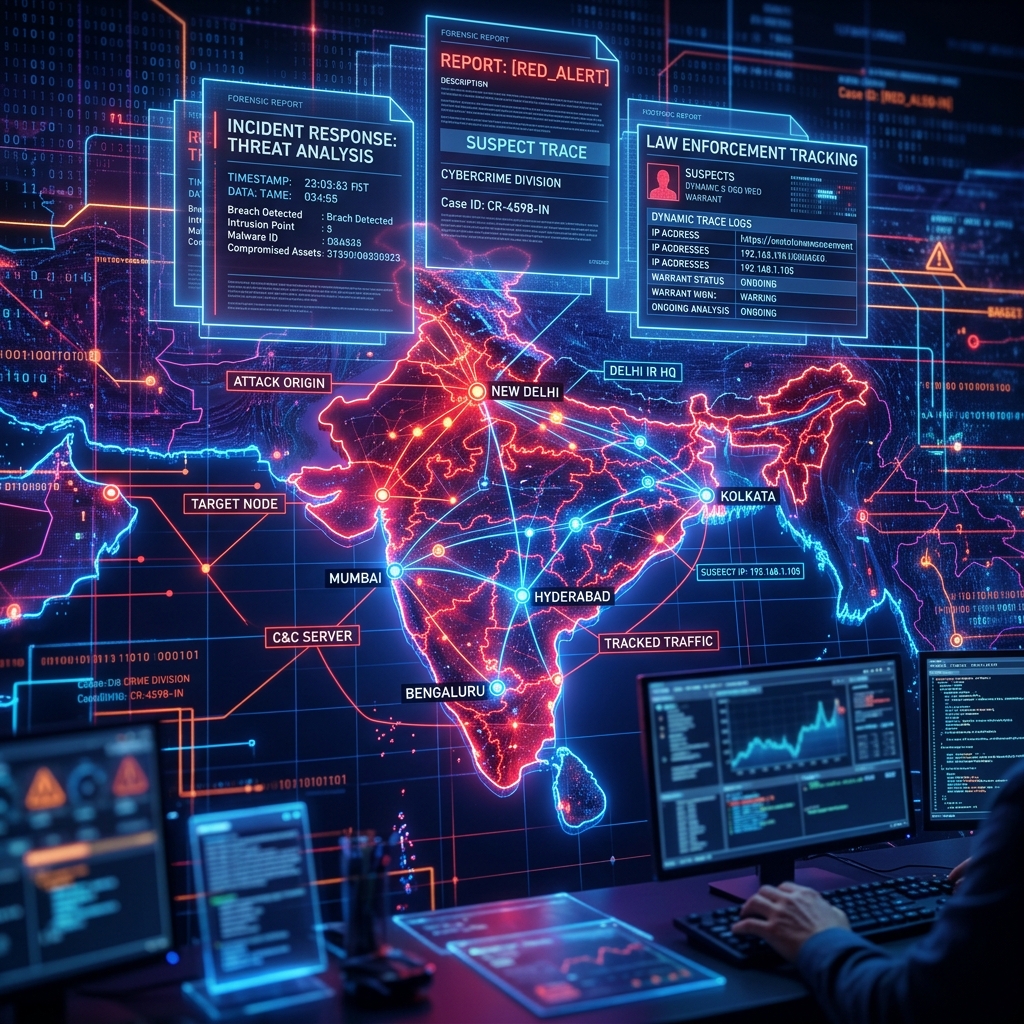
Priya filed a complaint on cybercrime.gov.in the same morning. She also called 1930. The case was registered under Section 66D of the IT Act (cheating by personation using a computer resource).
The bank was contacted. Four transactions to four different UPI IDs — all registered to different mule accounts across three states. Tracking these accounts takes weeks, sometimes months.
⚠️ The Hard Truth About Recovery
UPI fraud recovery rates are under 30% in India, and cases involving mule account chains (multiple UPI IDs across different banks) are particularly difficult. The best outcome is a partial recovery. The realistic outcome — especially for amounts under ₹10,000 — is that the money is gone. This is why prevention is the only real protection.
Aarav's ₹8,000 has not been recovered. The complaint is registered. The case is open. But the family knows the money may never come back.
What Aarav did get back, eventually, is something harder to quantify: the knowledge. He now runs a 5-minute cybersecurity session at the start of his school's gaming club meetings every month. He shows students this scam. He asks them: "Kisi ko kabhi aise message aaya hai?" Hands always go up.
"Mujhe ₹8,000 ka lesson mila. Tumhara free mein. Use kar lo."
Aarav's ₹8,000 is gone. Your child's doesn't have to be.
Share this with every parent in your family and school WhatsApp groups.
Share on WhatsApp · LinkedIn · School Parent Groups