Real-Life Cyber Story: The ₹12 Crore AI Deal an Indian Startup Lost Because of One Audit
Arjun Mehta had not slept properly in 11 days. His startup was one signature away from ₹12 crore and global recognition. Then an auditor asked one simple question — and the room went completely silent.

The Night Everything Changed
"He had not slept in 11 days. The biggest deal in the company's history was one signature away. And then — one question from an auditor thousands of kilometers away — and it all began to fall apart."
Arjun Mehta is 34 years old.
At 2:13 AM, the lights on the 14th floor of a glass building in Bengaluru's Whitefield were still on. Half-drunk coffee cups covered the conference table. Three MacBooks glowed in the dark. Somebody's Swiggy order from four hours ago sat cold and untouched near the whiteboard.
Outside, the city was quiet. The late-night BMTC buses had stopped. Auto drivers had gone home. Even the stray dogs outside the tech park had fallen asleep.
Inside, panic had started.
Not the loud kind. The silent kind. The kind where everyone is still talking, but nobody is actually saying anything useful anymore.
This Is Not A Hacking Story
Nobody's laptop was hacked. No malware was installed. No OTP was shared. What happened to Arjun's company is scarier — because it was completely invisible, perfectly legal, and 100% avoidable. And it's happening to Indian AI startups right now.
The Startup That Almost Made It
Three years earlier, Arjun and his co-founder Neeraj Kapoor had started Synaptech AI from a cramped 2BHK apartment in HSR Layout, Bengaluru.
Back then, it was just two engineers, one borrowed AWS account, and a dream big enough to fill that tiny apartment.
Arjun's mother, back in their hometown of Raipur, used to tell her relatives: "Mera beta Bengaluru mein software company chalata hai." (My son runs a software company in Bengaluru.) She didn't fully understand what AI meant — but she understood that her son was building something important.
Neeraj's wife Shreya had taken a pay cut at her own job so they could last two more months without investor money. Their daughter Priya, 6 years old, had memorized the company name and proudly told her classmates: "Papa ki company ka naam Synaptech hai."

Three years of sleepless nights. 94 employees. One dream — going global.
Now, in 2026, Synaptech had grown to 94 employees.
They had real investors. A proper office. Standing desks. An in-office barista machine that nobody had time to use properly. Arjun had been on NDTV. He had been featured in two startup magazines.
And they were one signature away from closing the biggest deal in company history.
💼 The Deal That Could Change Everything
A German healthcare network wanted to deploy Synaptech's AI assistant across 37 hospitals in Europe.
The AI would summarize clinical notes. Help doctors retrieve patient information faster. Reduce the mountains of administrative paperwork that were burning out healthcare workers across Germany.
The contract value: ₹12 Crore.
If this deal closed, Synaptech would officially become a global AI company.
Investors were excited. The office WhatsApp group was buzzing with memes about German sausages and European trips. LinkedIn draft posts were already written — just waiting for the official announcement.
Arjun's mother was already telling relatives that her son's company was going to Europe.
Then the auditor asked one question.
And the room changed.
The Question That Shook the Room
The call was supposed to last 30 minutes.
It was already entering its second hour.
On the screen: six people from the German procurement and compliance team. Their cameras were on. Nobody smiled anymore. The energy had shifted from formal-but-friendly to something that felt like a very polite courtroom.
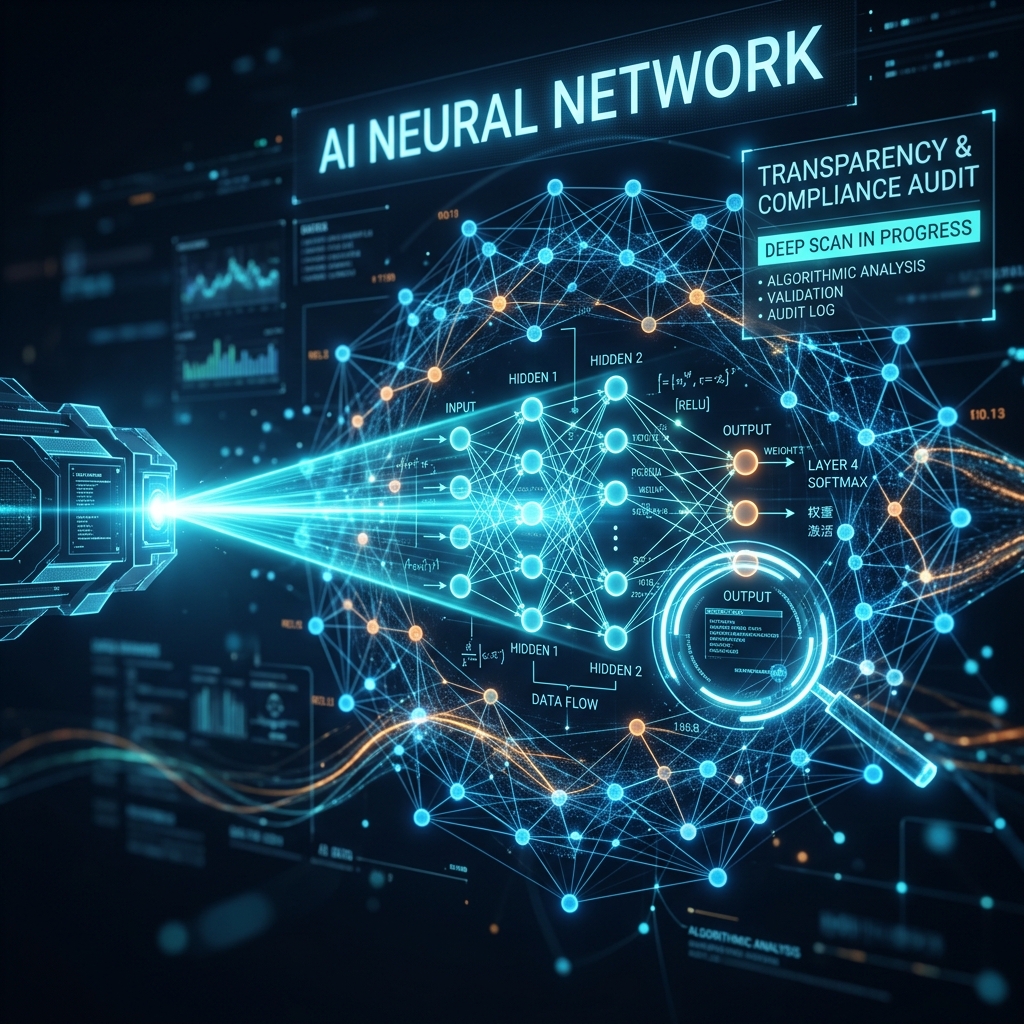
Enterprise auditors don't just check documents. They uncover what was always there — hidden in plain sight.
Arjun adjusted his headphones. Neeraj was typing fast, looking for a document. Their Head of Engineering, Ravi, was on mute, pulling up three dashboards simultaneously.
The auditor — a calm woman named Elise Bauer — spoke slowly and clearly:
"Can you show us how your platform handles AI compliance across jurisdictions?"
There was silence.
Not because Synaptech ignored security. They hadn't. Actually, by most standards, they were quite mature.
They had ISO certifications. Penetration testing reports from a reputed firm. SOC monitoring running 24/7. A privacy policy reviewed by lawyers who charged ₹8,000 per hour.
But Elise wasn't asking about documents.
She was asking about architecture.
And suddenly, nobody in the room had a clean answer.
The Problem Nobody Saw Coming
At first glance, Synaptech looked mature.
- The engineering team had implemented GDPR consent tracking for European users.
- The Indian legal consultants had started DPDP compliance documentation.
- Security teams maintained audit logs.
- DevOps had deployment records going back 18 months.
- The AI team stored model evaluation reports in a shared folder.
Different teams. Different spreadsheets. Different dashboards. Different definitions of the same system.
And none of them connected together.
The German auditor continued, calmly:
"Which model version generated clinical summaries for EU users last month?"
The AI lead opened one dashboard.
The DevOps engineer checked another.
The compliance manager searched through old Slack messages.
Nobody answered for 43 seconds.
"Bhai, check the Confluence page..."
"Yaar, I think it was updated last sprint..."
"Wait, was this the v2.1 or v2.3 build?"
"Can you check the Slack thread from March?"
That was the first bad sign.
The 5 Questions That Broke The Deal
Elise continued. Each question landed like a punch.

Different teams. Different systems. No single point of truth. That's where the deal broke.
"Which region processes healthcare data from your EU tenants?"
Three engineers gave three different answers. All technically correct. All from different parts of the system. None matching.
"Can Indian support engineers access EU patient records?"
Silence. Then a very uncertain: "We have role-based access..." The auditor wrote something down.
"Where is your runtime audit evidence for the current deployment?"
"We have logs..." (7 seconds pause) "...in our Grafana dashboard." The auditor asked for a live demo. Nobody was prepared.
"How do you prove human oversight exists for high-risk medical recommendations?"
This question confused even the product team. "We have a review workflow..." but showing it in real-time? Not possible that day.
"If a patient requests deletion of their data under GDPR — can you show us the end-to-end process?"
Three different team members began typing at the same time. Nobody had the complete answer. Nobody had the evidence connected in one place.
⏱️ What Was Happening in Germany
While Arjun's team scrambled through Slack, Confluence, and spreadsheets trying to find answers — the auditors were already writing their assessment. Every fragmented answer, every search, every pause cost trust. And trust, once lost in enterprise procurement, almost never comes back.
The 3:47 AM Moment
At 3:47 AM — four hours after the call ended — the Synaptech leadership team sat in the same conference room.
Cold coffee. Dead silence. Four people who had given three years of their lives to build this company.
Neeraj finally broke the silence. Slowly. Carefully. Like he was testing whether the words were even true.
"Yaar... we built AI products."
He paused for a long time.
"...but we never built AI governance."
That sentence stayed in the room.
Because it was true.
Synaptech had treated compliance like paperwork — something you do before the audit. Europe treated compliance like infrastructure — something you build into every layer of the system.
Those are two completely different things.
And the gap between them just cost them ₹12 crore.
What Most Indian Startups Still Don't Understand
Here's the hard truth. Most Indian AI startups still believe compliance means:
- A privacy policy PDF on the website
- Checkbox approvals before deployment
- A Google Doc with vendor questionnaire answers
- Documentation that gets written when the audit is announced
But in 2026, global enterprise buyers — especially in Europe, healthcare, finance, and government — want something completely different.
They want proof that compliance is built directly into the platform itself.
Not after deployment. Not before the audit. During every single stage:
What Enterprise Buyers Actually Check
DEVELOPMENT
Is governance built from day one, not bolted on later?
TESTING
Are evaluations tracked and auditable?
DEPLOYMENT
Is there a formal release gate with evidence?
RUNTIME
Is compliance enforced after deployment too?
The Hidden Cybersecurity Problem Behind AI Compliance

When AI governance fails, it creates a new kind of vulnerability — not in the code, but in trust.
This is where cybersecurity suddenly becomes central. And this is the part most founders miss completely.
Modern AI systems are not static applications. They change constantly:
- Models update silently
- Prompts get modified by product teams
- Retrieval data changes as new documents are added
- Policies shift across regions
- Runtime behavior drifts from intended behavior
- Human oversight workflows get bypassed under pressure
Without centralized governance, companies slowly lose visibility over their own AI systems.
And when visibility disappears... security follows.
🏗️ Think of AI Compliance Like Airport Security
Imagine an international airport. Every passenger has identity verification, baggage scanning, tracking, access control, surveillance, and audit records — all connected in one unified system.
Now imagine if baggage checks were in Excel, boarding approvals happened in Slack, CCTV logs existed in five different systems, and nobody knew which terminal processed which passenger.
That airport would collapse during the first serious investigation.
Synaptech's AI platform was that airport.
The 5 Layers Every AI Platform Now Needs

Real AI governance: security, oversight, and accountability built into every layer of the system.
What should Synaptech have built? Here are the 5 layers that enterprise-grade AI platforms need — explained simply.
System Inventory — "What Exactly Exists?"
Most companies cannot answer basic questions like: Which AI models are live? Which prompts are active? Which datasets are connected? Which customers use which versions?
If you cannot name your AI systems — you cannot govern them.
Policy Engine — "Which Rules Apply?"
Europe cares about GDPR and the AI Act. India cares about DPDP. Healthcare customers care about HIPAA-like safeguards. The platform itself must decide — in real time — where data can move, who can access it, and when human approval is required.
This cannot live inside somebody's memory or a Confluence page.
Release Gates — "Stop Unsafe Changes Before Production"
At Synaptech, prompt changes went live quickly. Nobody tracked risk impact, evaluation evidence, oversight approvals, or compliance implications. Modern AI releases need evaluation evidence, security checks, policy validation, and immutable approval history — exactly like CI/CD pipelines transformed software delivery years ago.
An AI release without a gate is a security incident waiting to happen.
Runtime Controls — "Compliance After Deployment"
A system may be compliant on launch day — and completely non-compliant 30 days later. Runtime controls monitor data routing, human oversight, risky outputs, operator access, and suspicious behavior continuously.
Without runtime visibility, AI governance becomes guesswork.
Evidence Fabric — "The Memory of the System"
This was Synaptech's biggest failure. Evidence existed everywhere — in Slack, Confluence, spreadsheets, dashboards, email. But nowhere together. When the auditor asked to see release approvals, model lineage, deletion evidence, and oversight records — nobody could connect them in real time.
Enterprise buyers lose confidence very fast when answers become fragmented.
The Scary Truth: They Weren't Insecure
Here's the part that should genuinely worry every Indian startup founder building AI products.
Synaptech was not hacked. They were not insecure by traditional definitions. Their team was genuinely talented. They had:
- SOC monitoring running 24/7
- Endpoint protection on all devices
- Cloud security best practices
- Access control policies
- Regular code reviews
But AI governance gaps created a new type of risk that traditional cybersecurity doesn't measure.
Not traditional hacking. Operational uncertainty.
And in regulated industries like healthcare, finance, insurance, and government — uncertainty kills trust faster than any vulnerability.
The Deal That Died Slowly
The German company didn't reject them during the meeting. That would have been easier to handle.
Instead, they sent an email two days later.
Professional. Polite. Cold.
📧 FROM: Elise.Bauer@HealthNet-Europa.de
"We require additional evidence regarding AI governance maturity and cross-jurisdiction compliance operations before proceeding further with the procurement process."
"Extended review" = enterprise language for "We don't trust this platform enough yet."
Three months later, the customer selected a European competitor.
Not because Synaptech's AI was worse. Their model was actually more accurate.
Not because their security was weaker. Their SOC was solid.
Because the governance was not there. And in healthcare — where patient data, life-and-death decisions, and GDPR compliance all intersect — governance is everything.
Arjun's mother stopped telling relatives about the European deal. She didn't know how to explain what had happened.
Neeraj's daughter kept telling her classmates that Papa's company was going to Germany. He didn't correct her.
What This Means for You Right Now
The choice every AI startup faces in 2026: build controlled, governable systems — or stay out of global enterprise deals.
This shift is happening quietly. While most Indian founders are focused on model quality, GPU cost, AI features, and funding rounds — global enterprises are silently changing procurement expectations.
In 2026, buyers increasingly ask:
- Show runtime governance evidence — not documents
- Show AI release approval history — immutable, not editable
- Show human oversight workflows — live, not in a slideshow
- Show cross-border data controls — enforced, not assumed
- Show incident response capability — proven, not promised
💡 The Biggest Misunderstanding
AI compliance is no longer just legal paperwork. It is now deeply technical. It affects architecture, pipelines, logging, deployment, runtime behavior, release workflows, and monitoring systems.
In simple words: AI compliance is becoming part of cybersecurity engineering itself.
The startups that prepare early will scale globally.
The rest will remain trapped in endless "extended procurement reviews."
At 1:26 AM, weeks after losing the deal, Arjun sat alone in the office staring at the rejected procurement assessment.
One line was highlighted in the PDF.
Not insecure. Not hacked. Not vulnerable.
Just... not governable enough.
And that is becoming the biggest reason AI companies fail global expansion. Because in 2026, the companies winning international trust are not just building intelligent AI systems.
They are building controllable ones.
Your AI Governance Checklist: 10 Things to Do This Week
Create a live AI system inventory. List every model, every prompt, every dataset in production. Update it weekly — not when the auditor asks.
Map your data flows across regions. Know exactly which EU data goes where, who can access it, and whether that access is logged.
Implement release gates for AI changes. Prompt changes, model updates, retrieval changes — all should have formal approval with immutable audit evidence.
Build runtime monitoring for your AI layer. Track outputs, flag risky patterns, and document human interventions automatically.
Centralize your evidence. Release approvals, model lineage, evaluation reports, deletion evidence — all in one searchable place, not across 7 Slack channels.
Run a mock audit on yourself quarterly. Ask your team the questions Elise asked Synaptech. Measure how long it takes to answer. Reduce that time every quarter.
Understand GDPR + DPDP + EU AI Act basics. You don't need to become a lawyer — but your CTO and CPO absolutely must understand what these frameworks require of AI systems.
Assign a governance owner — not a compliance officer. This person must be technical. They must understand AI pipelines. A legal-only person cannot govern a technical AI system.
Test your incident response plan for AI failures. What happens if your AI gives a wrong medical recommendation? Who gets notified? What is the rollback process? Can you prove it?
Start now — not before the next deal. Synaptech lost 11 months of work because they started thinking about governance after the deal was already in progress. Build this into your foundation today.
Share This With Every Startup Founder You Know
Forward this on WhatsApp, LinkedIn, or just show it to your CTO. This is not just a story — this is a ₹12 crore lesson that could save your next enterprise deal.
"Bhai, ye padhna zaroor — startup ke liye bahut important hai." 🙏