

Real-Life Cyber Story: The WhatsApp Message That Cost Sahil ₹30,000 in 11 Minutes
He was half asleep. His wife was asleep. His daughter was asleep. The ceiling fan hummed softly in a quiet Bengaluru night. Then a WhatsApp message arrived from his "closest friend" — same face, same DP — and in 11 minutes, ₹30,000 was gone forever.
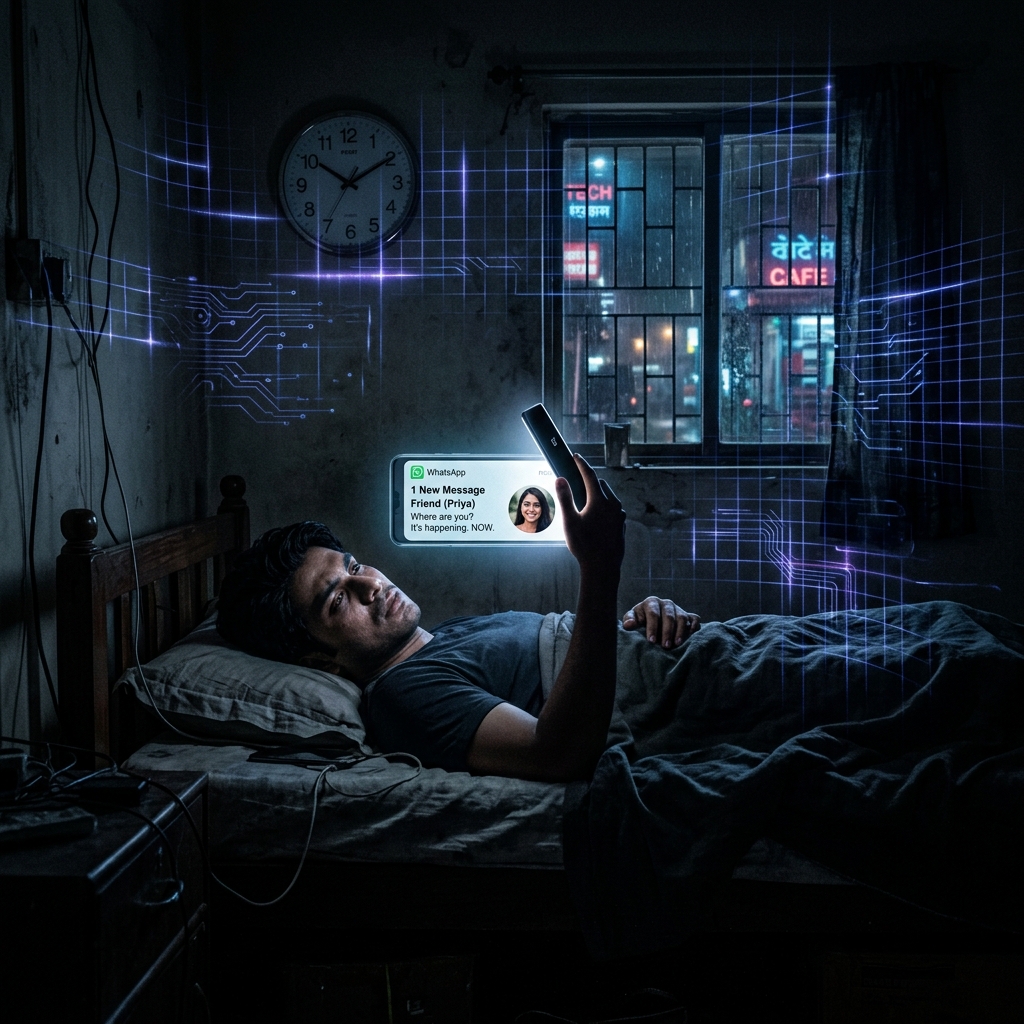
11:07 PM. A quiet Bengaluru night. One WhatsApp notification — and everything changed.
11:07 PM — The Message That Changed Everything
"He was half asleep. His wife was breathing softly beside him. His daughter curled up on the other side. The ceiling fan hummed. His phone buzzed — and in 11 minutes, ₹30,000 disappeared."
Sahil Verma is 31 years old. Software developer. Works at a mid-size IT company in Bengaluru's Koramangala area. Good job, decent salary, young family. His daughter just turned six. His wife is a schoolteacher.
Thursday had been brutal. Client deadline. Three back-to-back video calls. A bug that shouldn't have existed but did. By the time he finally put his laptop away, it was past 10:30 PM.
He was almost asleep when his phone buzzed.
WhatsApp notification. Unknown number. But the profile picture made him sit up immediately.
It was Rohit.
His closest college friend. Same smiling face. Same black T-shirt from their Goa trip three years ago. Same WhatsApp DP Rohit had been using for months.
"Sahil bhai… how are you? I need ₹50K urgently. Please send in UPI."
Sahil sat up fully.
At first, nothing felt strange. People change numbers all the time — when traveling, when using a temporary SIM, when switching operators. He typed back:
"What happened bro?"
The reply came instantly.
"Please bhai… I'm stuck in middle of something urgent. Need help immediately."
Something about the speed of the response made Sahil slightly uneasy. But then again…
It was Rohit.
The same Rohit who helped him study the night before his engineering entrance exam. The same Rohit who flew down from Delhi when Sahil's father was in the hospital — without even being asked. The same Rohit who was best man at his wedding.
When emotion enters the room… logic quietly leaves through the back door.

The real attack isn't technical — it's psychological. Emotion defeats logic every time.
The One Thing That Lowered His Guard
Sahil looked at the profile picture again.
That face removed every suspicion.
Because human beings are wired to trust familiarity. A familiar voice. A familiar face. A familiar name. And cybercriminals — the smart ones — understand this better than most psychologists do.
In 2026, they no longer need to hack your bank password first.
They just need to hack your trust.
"Can I Call You?"
Sahil finally typed:
"Can I call you? I know it's late."
The reply came within seconds.
"I'm in middle of something urgent. Can't talk now. Please transfer quickly."
That line mattered more than Sahil realized.
"Can't talk now" is one of the oldest psychological moves in phone fraud. Because urgency kills verification. When humans feel pressure, they:
- Verify less
- Think less clearly
- React emotionally instead of rationally
- Prioritize speed over caution
Sahil's heartbeat increased slightly. He hesitated. Opened PhonePe. Closed it. Opened WhatsApp again.
He looked at Rohit's photo one more time.
Then came another message:
"Please bhai. I wouldn't ask if it wasn't serious."
That sentence broke his resistance.
At 11:18 PM… Sahil opened PhonePe. Searched for Rohit's UPI ID (sent by the scammer). And transferred ₹30,000.
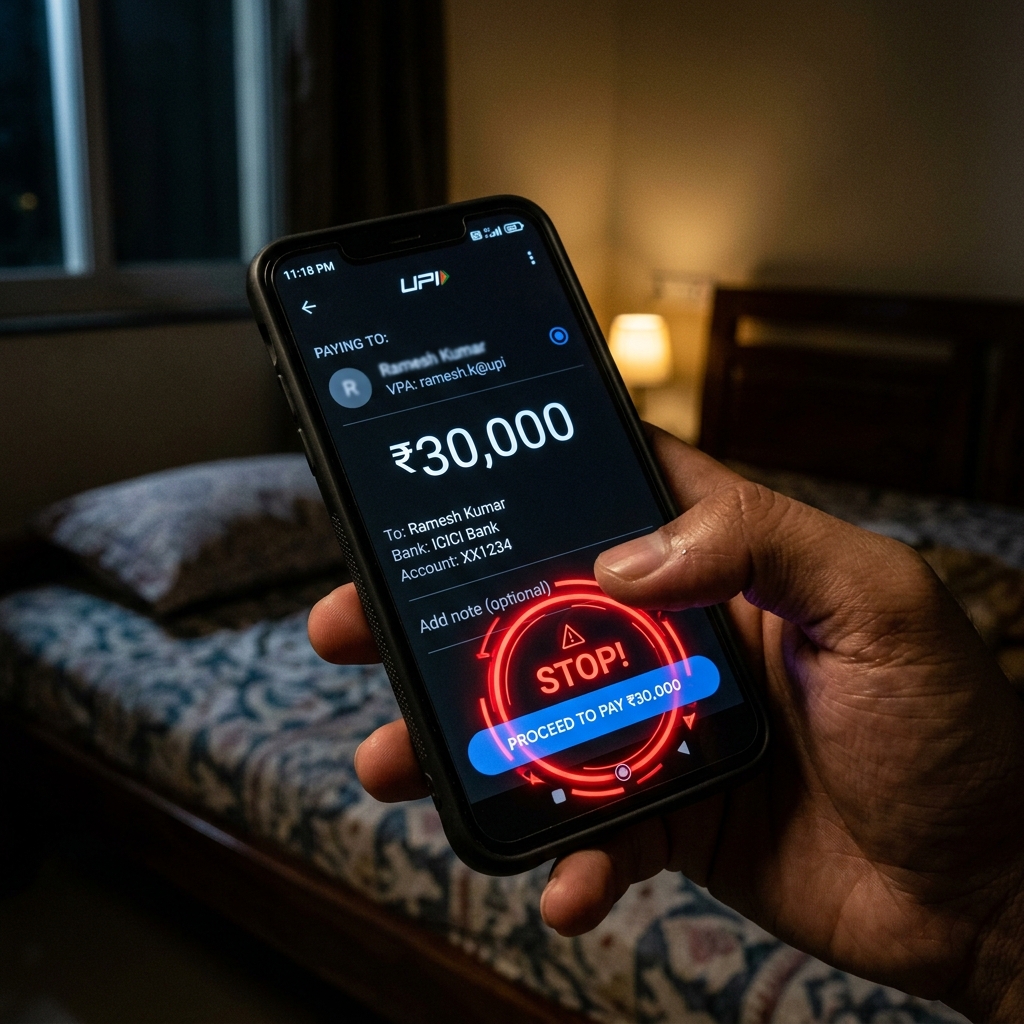
11:18 PM. ₹30,000 sent. The scammer had achieved the goal in 11 minutes flat.
The Silence After the Transfer
The scammer replied instantly.
"Thank you bhai. I'll return tomorrow."
And then… nothing.
The house became quiet again. The ceiling fan still hummed. His wife still slept peacefully. His daughter's tiny feet were still curled up under the blanket.
But something inside Sahil still felt uncomfortable. Not enough to panic. Just enough to disturb sleep.
At 2:41 AM, another notification arrived. Same number.
"Can you send remaining ₹20K?"
This time… something changed.
Not fear. Not shock. Pattern recognition.
Because real emergencies become calmer after help arrives. Scammers become greedier.
The 2:47 AM Call That Changed Everything
Sahil immediately opened Rohit's original contact. The real number. His saved contact, saved for years.
He pressed call.
Three rings.
Sleepy voice.
"Hello?"
Sahil froze.
"Bro… where are you right now?"
"At home yaar. Kya hua? Why are you calling at this time?"
Sahil's stomach dropped instantly. Cold. Heavy. Numb.
"Did you… ask me for money tonight?"
Silence.
Then the words that made his chest tighten:
"No bro… what happened? Are you okay?"
At 2:47 AM, Sahil realized he had transferred ₹30,000 to a complete stranger.
Not because his bank was hacked. Not because malware infected his phone. Not because he was careless or foolish.
Because someone copied a profile picture.
And manipulated human trust — the one thing no bank security can protect.
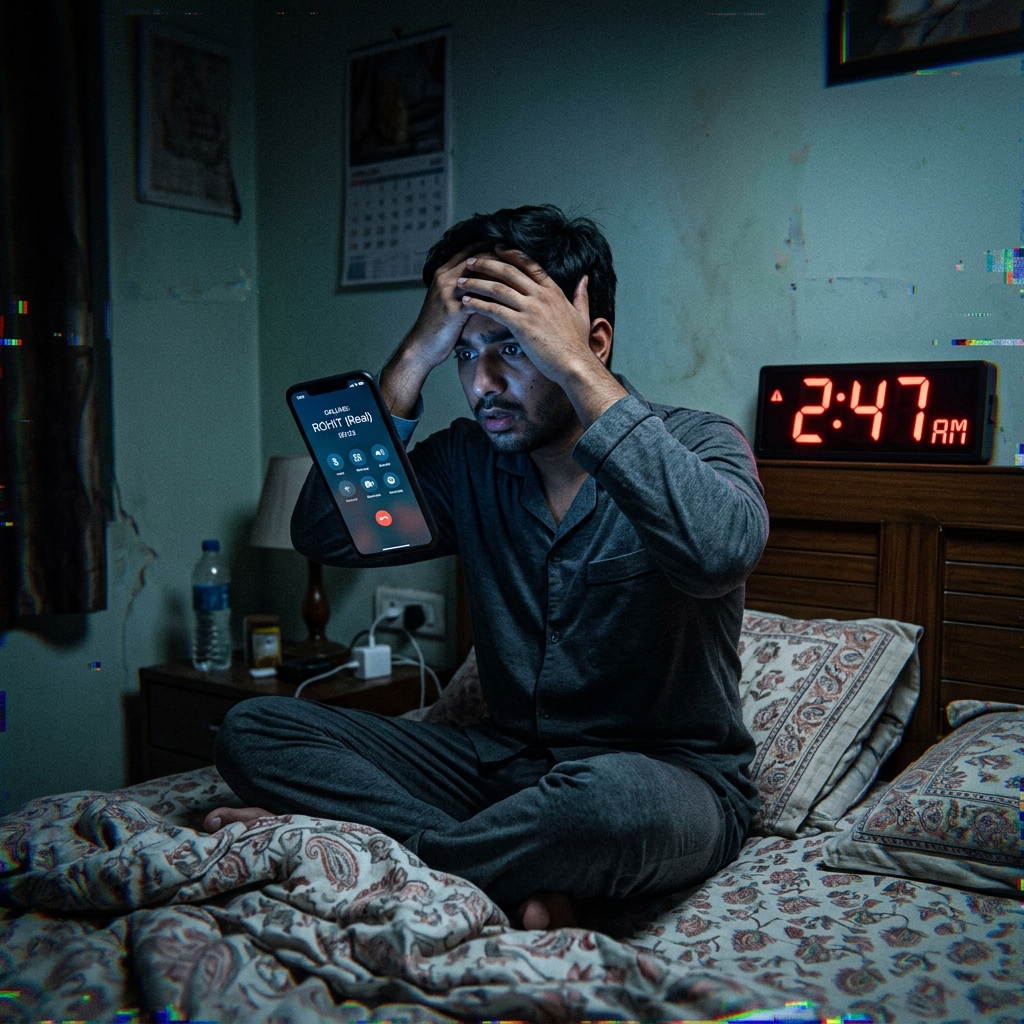
2:47 AM. The real Rohit's voice. The worst three words: "No bro… kya hua?"
The Scam Was Technically Simple — And That's the Scary Part
No sophisticated hacking. No malware. No zero-day exploit. No spyware installed on his phone.
The scammer simply:
- Copied Rohit's WhatsApp profile picture (public, accessible to anyone)
- Created a new WhatsApp account with a cheap SIM
- Messaged contacts late at night — when people are tired
- Created urgency ("can't talk, need it now")
- Avoided any voice or video verification
- Emotionally pressured the victim using a familiar face
That's it.
No code. No hacking. Just psychology. And it worked perfectly.
Because cybercrime today is increasingly less about technology — and more about exploiting human psychology.
⚠️ Think About This
Your WhatsApp DP is public. Your name is visible. Your mutual connections are visible. A scammer can create a "you" in under 2 minutes — and message your parents, your siblings, your friends. Right now. Tonight. Does your family know what to check?
Why Smart, Educated People Still Fall For This
After the incident, Sahil kept repeating one sentence to himself:
"Main jaanta tha yeh scams hote hain. Socha tha mujhe nahi hoga. Yaar ki photo dekhi aur sab bhool gaya." ("I knew these scams happen. I thought it wouldn't happen to me. I saw my friend's photo — and forgot everything else.")
That sentence is heartbreakingly common among cybercrime victims.
Because most people picture scams as: badly written emails, obvious lottery wins, strangers with broken English. Modern scams look nothing like that.
They look like your best friend's face at 11 PM.
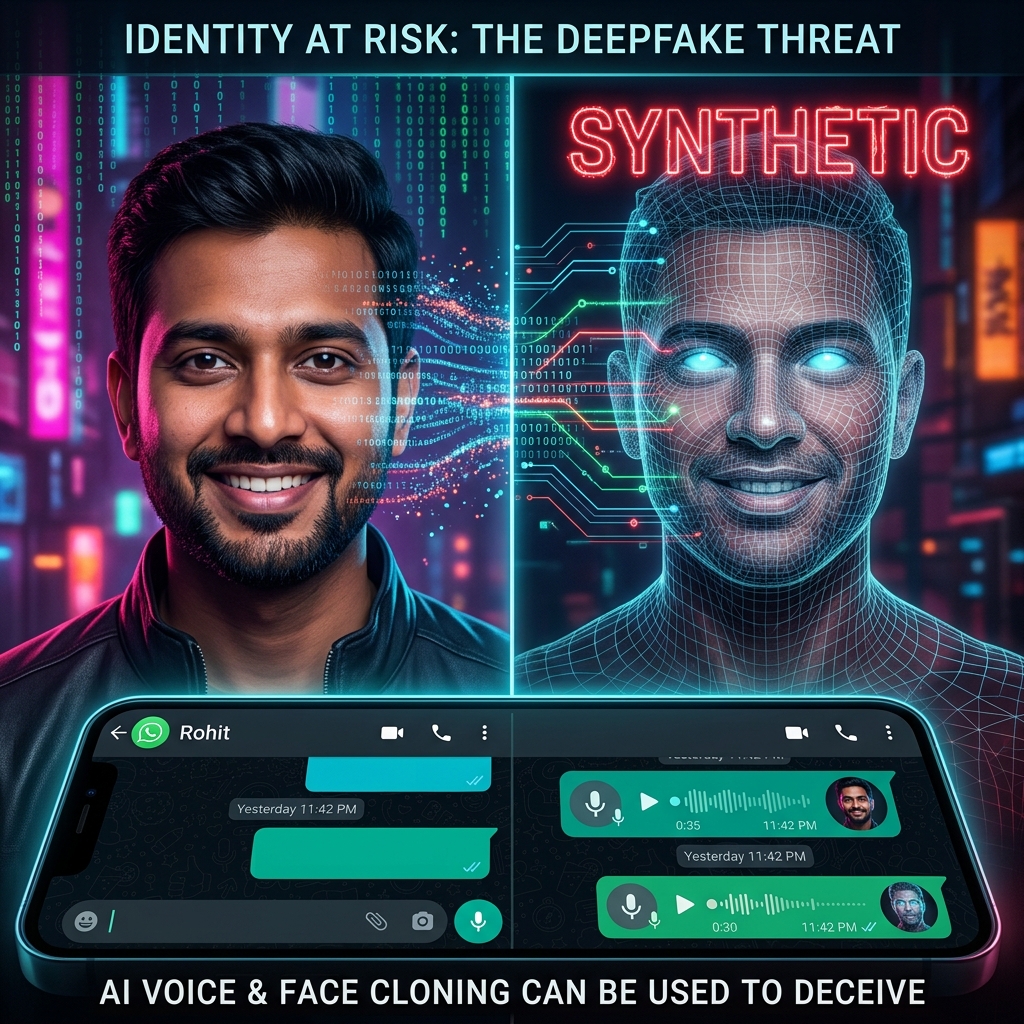
The Real Damage Wasn't Just ₹30,000
Sahil filed a complaint on cybercrime.gov.in that same night at 3 AM. He called 1930. He went to his bank branch the next morning when it opened.
The bank said: the transaction was authenticated with correct UPI PIN entered from his device. From their records — it looks like he authorized it willingly. Investigation would take 45 working days.
₹30,000 was 8 months of SIP contributions he and his wife had been building for their daughter's education fund. That's what made his wife go quiet for two days. Not angry — just… quiet.
Weeks later, Sahil admitted something even more painful:
"Paise wapas aate toh bhi theek tha. Jo dard diya woh tha — ki sirf ek photo ne mujhe tod diya. Ek photo. 11 minute. ₹30,000." ("Even if money came back, it would've been okay. What hurt more — one photo broke me completely. One photo. 11 minutes. ₹30,000.")
That is the invisible damage cybercrime leaves behind. You stop trusting messages. Calls. Notifications. Even genuine emergencies from real friends start feeling suspicious.
And that psychological damage never appears in any bank report or police complaint.
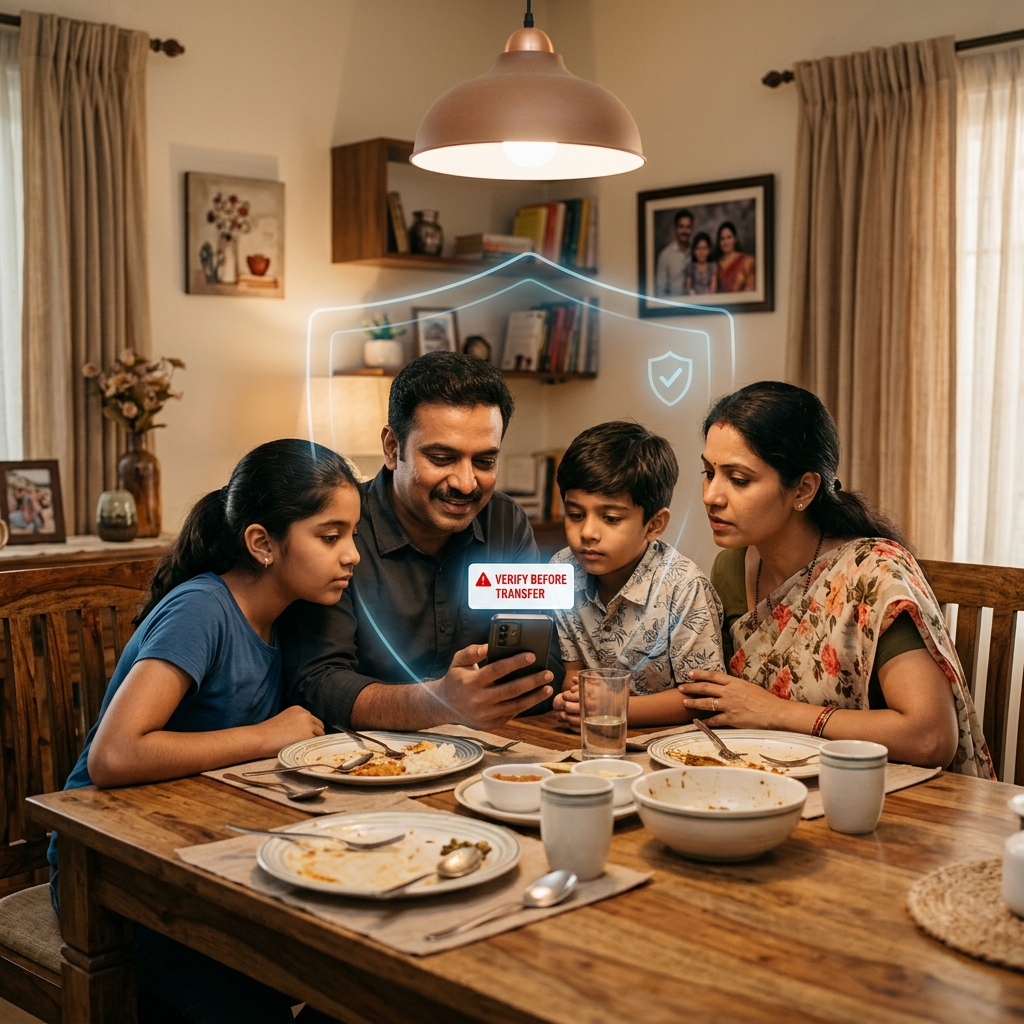
The best cybersecurity tool in 2026 is still a family that talks about these scams.
The Scammer's Playbook — Step by Step
Step 01 — Minutes Earlier
Scammer downloads Rohit's profile picture from his public WhatsApp account. Takes literally 5 seconds.
Step 02 — Account Setup
Creates a new WhatsApp account with a cheap SIM. Sets the stolen DP. Same photo. Same Rohit.
Step 03 — Late Night Targeting
Sends messages after 10 PM — when target is tired, sleepy, and thinking is slower.
Step 04 — Urgency Injection
Creates false emergency. Refuses video/voice call. Pushes for immediate money transfer.
Step 05 — Collect & Disappear
Receives money. Blocks the victim. Account gone. Money gone. Scammer onto the next target.
6 Lessons Every Indian Family Must Learn From Sahil's Story
Lesson 1 — Never Trust a WhatsApp DP
Anyone can download your friend's profile picture in seconds. A familiar face on an unknown number is not proof of identity. It is a trap. The DP means nothing.
Lesson 2 — Money Requests ONLY After Voice/Video Verification
No exceptions. No matter how urgent. No matter whose face is on that profile picture. Call the saved number. Not the one that messaged you — your saved contact. If they refuse to speak, assume it is fraud. Every time.
Lesson 3 — Urgency Is the Scammer's Favorite Weapon
"Right now." "Emergency." "Immediately." "Can't talk." These are not signs of real emergency — they are psychological pressure tactics designed to shut off your rational brain before you can verify anything.
Lesson 4 — Create a Family Verification Code Word
One secret word only your family members know. If anyone claiming to be family asks for money without saying this word first — do not send. Simple. Powerful. AI can clone a voice, but it cannot know your private code word.
Lesson 5 — Late-Night Panic Messages = Extra Suspicion
Scammers deliberately target exhausted brains. After 10 PM, our judgment is weakest. If you get an urgent money request at night from an unknown number — sleep on it. If it was a real emergency, they will call the real number.
Lesson 6 — Teach Your Family BEFORE the Loss Happens
Most victims are not "stupid." They are emotionally manipulated under pressure. Your parents. Your siblings. Your relatives. They are the targets — not you. Have this conversation at dinner tonight. Not after someone loses money.
✅ Your WhatsApp Security Checklist — Do This Today
Set your WhatsApp DP to "My Contacts" — so strangers cannot copy it. Settings → Privacy → Profile Photo → My Contacts.
Never send money without a voice call to a saved number. Not video. Not audio message. A live voice call to the number you saved years ago.
Set a UPI daily transfer limit in your banking app. Even if you get tricked, the damage is capped. Most banking apps allow this in settings.
Create a family "safe word" — a random word only your family knows. Any urgent request must include this word, or it gets ignored.
Pause 30 seconds before sending money. 30 seconds is enough time for your rational brain to override your emotional reaction. That pause may save your savings.
Final Thought — The 30-Second Rule
Cybercrime is changing.
Old internet scams attacked your devices. New AI-powered scams attack your emotions — your love for friends, your fear for family, your trust in familiar faces.
Emotions do not have antivirus protection.
So before you send money… before you trust urgency… before you believe a familiar face on an unknown number…
Pause for 30 seconds.
That pause may save your money, your family's peace, your child's education fund — and one very painful night you will never forget.
📌 Quick Rule to Remember
Unknown number + Known DP + Urgent money = 🚨 SCAM. Always. Call the saved number first.
Get Cyber Alerts Before Scams Hit Your City
Join thousands of Indian families getting weekly cybersecurity briefings in plain language.