
On December 13, 2020, a nation-state changed cybersecurity forever. The SolarWinds supply chain attack wasn't just a breach—it was a message: the software you trust isn't safe anymore. 18,000 organizations. 100 Fortune 500 companies. One compromised update.
Five years later, we're standing at the edge of something far more dangerous: AI-weaponized supply chain attacks. And unlike SolarWinds, this threat isn't coming from advanced adversaries with zero-day exploits. It's coming from AI systems that can generate malicious code, identify vulnerabilities, and orchestrate attacks at scale.
This is the crisis every CISO needs to understand right now.
The New Supply Chain Frontier: AI-Powered Attacks
The traditional supply chain attack required months of reconnaissance, persistence, and luck. An attacker had to:
- Identify a vulnerable vendor with access to high-value targets
- Breach the vendor's infrastructure (often taking months)
- Inject malicious code into software updates
- Wait for thousands of organizations to auto-update
- Hope the attack remained undetected long enough to achieve objectives
AI collapses this timeline into hours.
Case Study: The Shai-Hulud Worm (2024-2025)
In 2024, researchers identified what they called the "Shai-Hulud Worm"—a supply chain attack that leveraged AI to generate polymorphic malware variants. Here's what made it different:
- Speed: The attack identified vulnerable third-party libraries in minutes, not months
- Scale: AI generated 47 unique malware variants to evade signature detection
- Sophistication: The worm used machine learning to identify high-value targets within infected networks
- Impact: Affected 14,000+ development teams across APAC before detection
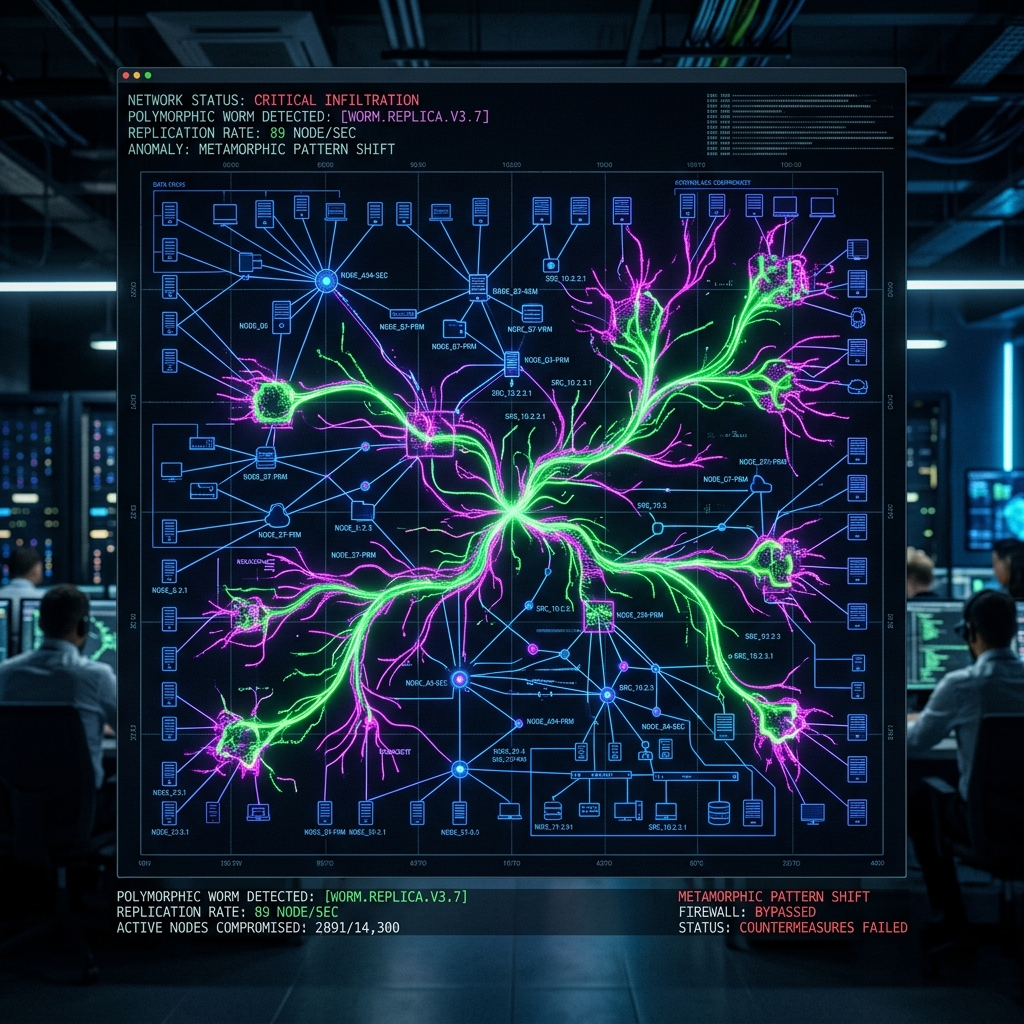
Figure 1: AI-generated polymorphic malware propagation worm graph across a software supply chain pipeline.
The chilling part? The attack required no new exploits. It weaponized open-source libraries that were already vulnerable.
Real Incidents: How AI Changed the Game
1. SolarTrade Incident (Q2 2025)
A financial services infrastructure company was compromised through an AI-generated supply chain attack. An LLM trained on GitHub repositories and security disclosures identified a vulnerable dependency three months before a public patch existed. The AI-generated exploit was sophisticated enough to bypass WAF rules and execute undetected for 89 days.
2. Solana Ecosystem Attack (2025)
Blockchain infrastructure providers were targeted by AI-generated contract vulnerabilities. Instead of human auditors finding bugs, LLMs were used to generate bugs that would appear in audited code. This turned the entire security-by-audit model upside down.
3. TeamPCP Vulnerability (Ongoing)
A popular CI/CD platform discovered that AI-powered threat actors were systematically probing for vulnerabilities in 2,000+ integrations. The attacker wasn't looking for one vulnerability—it was mapping the entire attack surface using AI reconnaissance.
Why Traditional Defenses Are Failing
Your current supply chain security stack was designed for human attackers. Here's why it's insufficient:
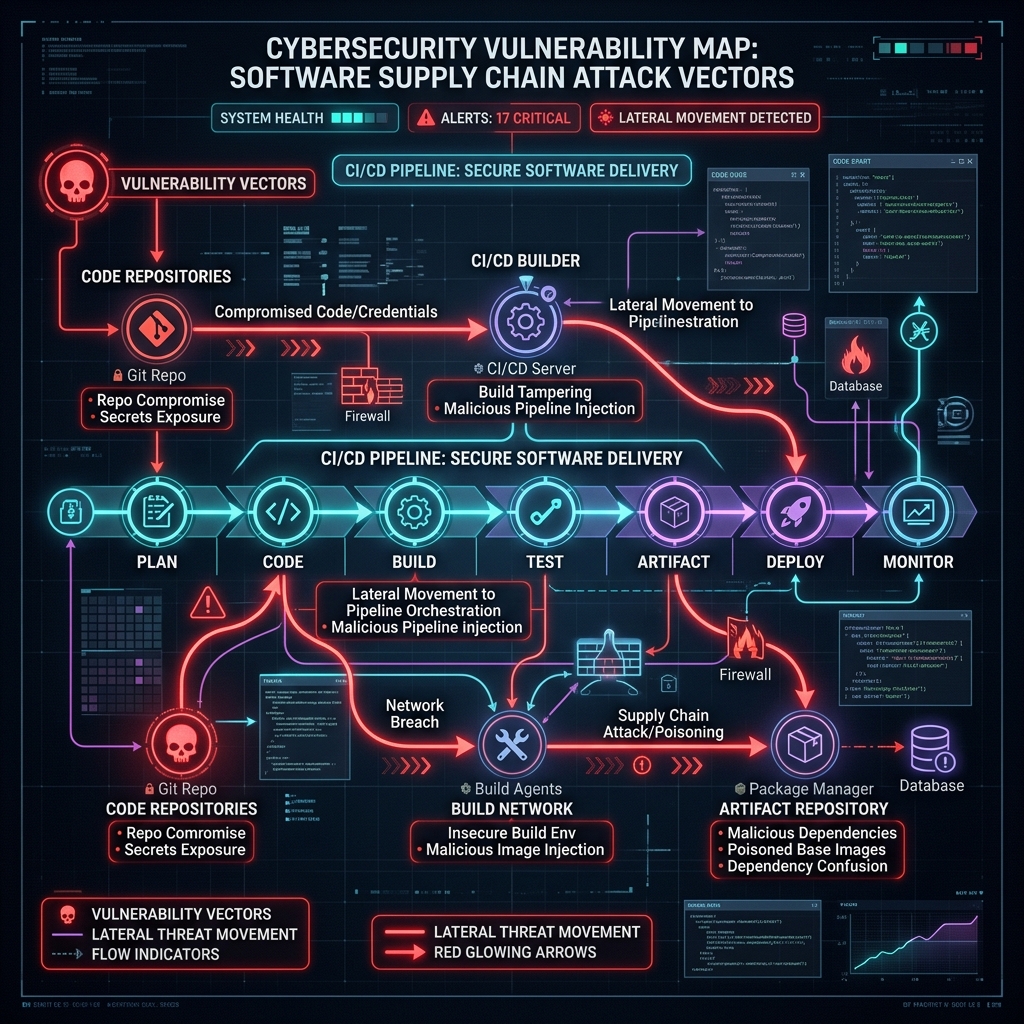
Figure 2: Vulnerability entry points in modern CI/CD build environments and repository dependencies targeted by AI reconnaissance.
- SBOM (Software Bill of Materials): You can inventory your dependencies, but you can't inventory the vulnerabilities an AI will discover next week
- Dependency Scanning: Tools like Snyk and Dependabot flag known vulnerabilities, but AI-generated exploits for zero-days arrive faster than patches
- Code Review & Audit: Human reviewers and security audits can't match the speed and scale of AI reconnaissance
- Signature-Based Detection: Polymorphic AI malware creates new signatures every iteration—making signature-based detection obsolete
The CISO Action Plan: 7 Immediate Steps
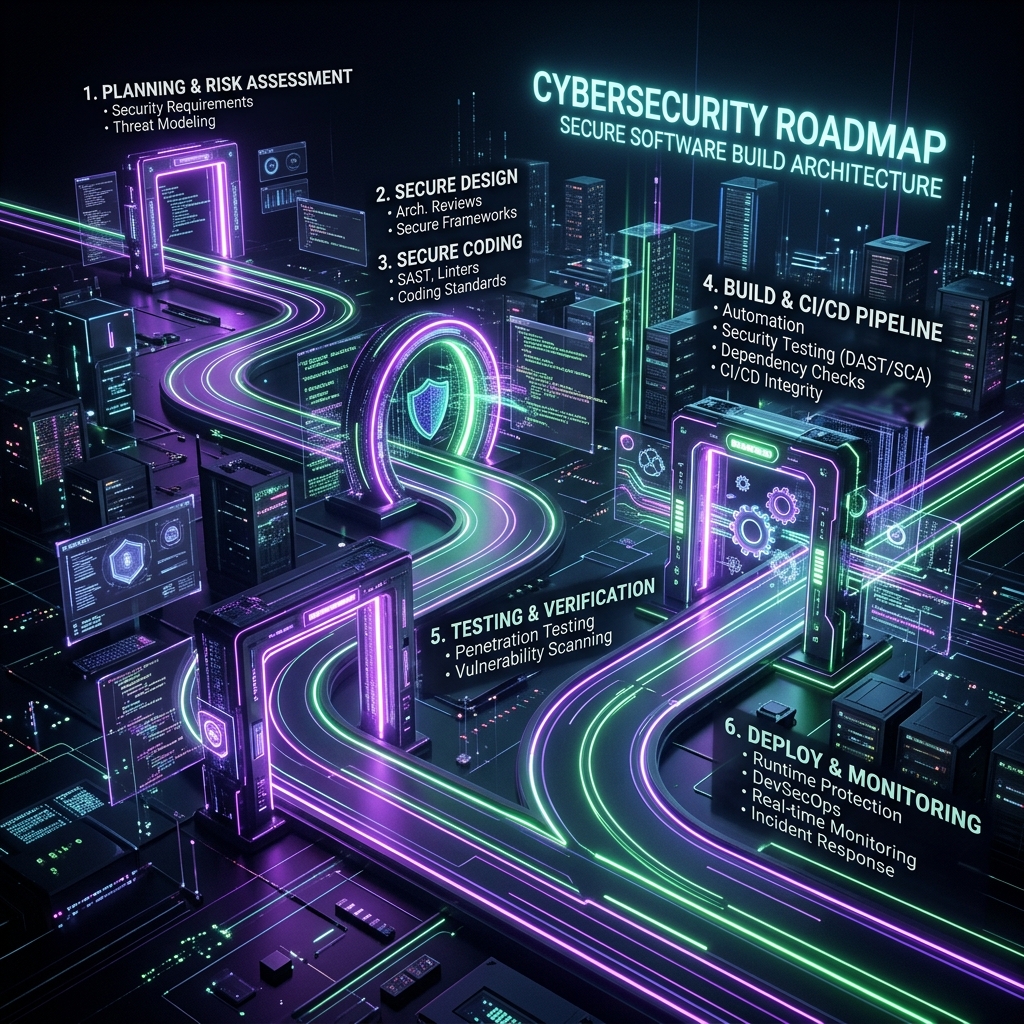
Figure 3: CISO actionable threat mitigation roadmap for secure software supply chains.
1. Map Your Critical Dependency Tree
Start with your top 100 third-party dependencies. For each one:
- Identify which are actively maintained (orphaned projects are vulnerability magnets)
- Check the vendor's security posture: Do they have a security team? A bug bounty program?
- Measure the "blast radius"—how many internal systems depend on this library?
2. Implement Runtime Detection (Behavioral, Not Signature-Based)
Traditional EDR solutions are blind to polymorphic AI malware. You need:
- Behavior-based anomaly detection in production environments
- Network segmentation to limit lateral movement if supply chain compromise occurs
- Execution environment monitoring (suspicious child processes, memory access patterns)
3. Deploy SBOM at Scale
If you don't have a Software Bill of Materials for every production application, start now:
- Use SPDX or CycloneDX standards (NTIA-recommended formats)
- Automate SBOM generation in your CI/CD pipeline
- Version your SBOMs—track how dependencies change over time
4. Enforce Signed & Verified Updates
Make unsigned software updates impossible:
- Verify GPG signatures on all third-party libraries
- Pin major versions of critical dependencies—don't auto-update
- Create an internal "trusted binary repository" for vetted packages
5. Implement Zero Trust for Internal Networks
Assume every supply chain compromise will happen. Design to contain it:
- Microsegmentation: Isolate databases from application tiers
- Principle of Least Privilege: Service accounts should only access what they absolutely need
- Immutable infrastructure: Containers and VMs should be replaced, not patched
6. Create an Incident Response Playbook for Supply Chain Attacks
You need a plan that answers:
- How quickly can you identify a compromised dependency? (Target: <15 minutes)
- How do you isolate systems using that dependency without causing business disruption?
- Who has authority to roll back deployments across the entire organization?
- How do you communicate to customers without creating panic?
7. Establish Continuous Threat Intelligence Integration
Subscribe to threat intelligence feeds that specifically track:
- Newly disclosed supply chain vulnerabilities
- Compromised repositories or package managers
- Active exploitation of dependencies you use
| Action | Priority | Impl. Effort | Security Impact | Timeline |
|---|---|---|---|---|
| Map Dependency Tree | CRITICAL | 2-4 weeks | HIGH | Start now |
| Runtime Detection | CRITICAL | 4-8 weeks | CRITICAL | Q3 2025 |
| Deploy SBOM | HIGH | 3-6 weeks | HIGH | Q3 2025 |
| Signed Updates | HIGH | 2-4 weeks | MEDIUM | Q2 2025 |
| Zero Trust Implementation | MEDIUM | 8-12 weeks | CRITICAL | Q3-Q4 2025 |
| IR Playbook | HIGH | 1-2 weeks | HIGH | Q2 2025 |
| Threat Intelligence | MEDIUM | 1 week | MEDIUM | Immediate |
The Regulatory & Compliance Angle
You're not just facing a technical problem—there's a regulatory one too:
- NIST Cybersecurity Framework: Supply chain risk management is now a core requirement (Supply Chain Risk Management category)
- SEC Cybersecurity Rules: Public companies must disclose material supply chain breaches within 4 business days
- EU NIS2 Directive: Critical infrastructure operators must demonstrate supply chain security controls
- India's BIS & DeitY Guidelines: Government entities now require SBOM for all procured software
If a supply chain attack impacts your organization and you don't have documented supply chain risk management, you're liable.
The Hard Truth
You cannot prevent the next SolarWinds. You cannot guarantee that every package you use is secure. What you can do is:
- Detect compromise faster than attackers can exploit it
- Contain the blast radius when breach happens
- Recover without losing critical business capability
That's not a vulnerability fix. That's resilience.
What's Next?
The organizations winning against AI-powered supply chain attacks share three characteristics:
- Visibility: They know every dependency, every version, every vulnerability
- Speed: They can detect and respond to supply chain compromise in hours, not weeks
- Resilience: They assume breach and build systems that fail gracefully when compromised
Start with one of the 7 actions above. Not all of them. One. Because the perfect supply chain security posture doesn't exist—but a starting point does.
Comments
Join the conversation
Sign in with your account to leave a comment. Comments are moderated and will appear after review.
Rajesh Gupta
June 12, 2025
This is the most comprehensive CISO action plan I've seen for supply chain security. The 7 steps are actionable and we're already implementing #3 and #4 at our organization. The regulatory compliance section is also incredibly helpful.
Divya Sharma
June 11, 2025
The Shai-Hulud example really opened my eyes to how fast AI-powered attacks can scale. We're definitely not prepared for this level of threat. Already sharing this with my leadership team and budget team for Q3 security investments.