
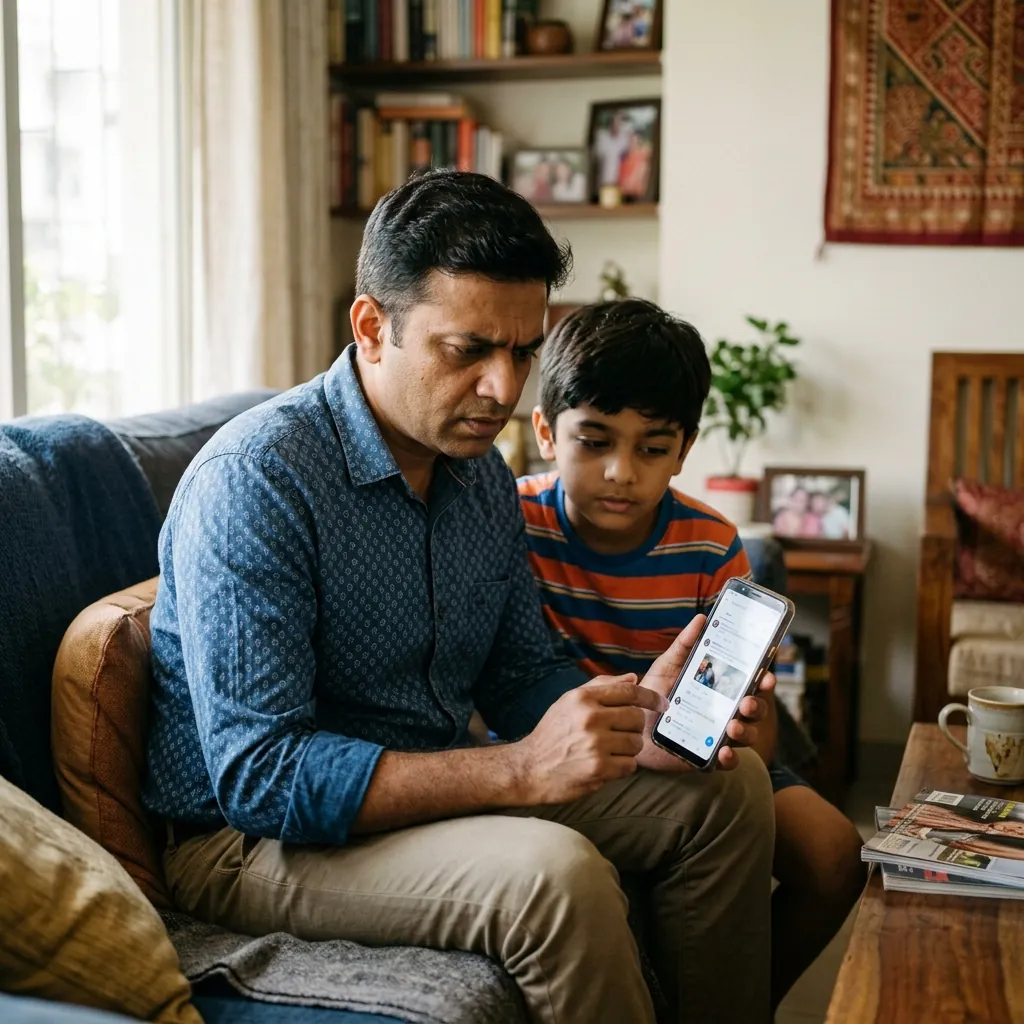
You didn't fail as a parent. You didn't miss any warnings. Your child just asked Instagram for help—and that was enough. Instagram's algorithm doesn't check age. It doesn't verify consent. And right now, nearly every child on the platform is being exposed to content their parents have no idea about.
This is the threat every Indian parent and guardian needs to understand today.
The StoryDeepa's Tuesday Evening: When Trust Became Exposure
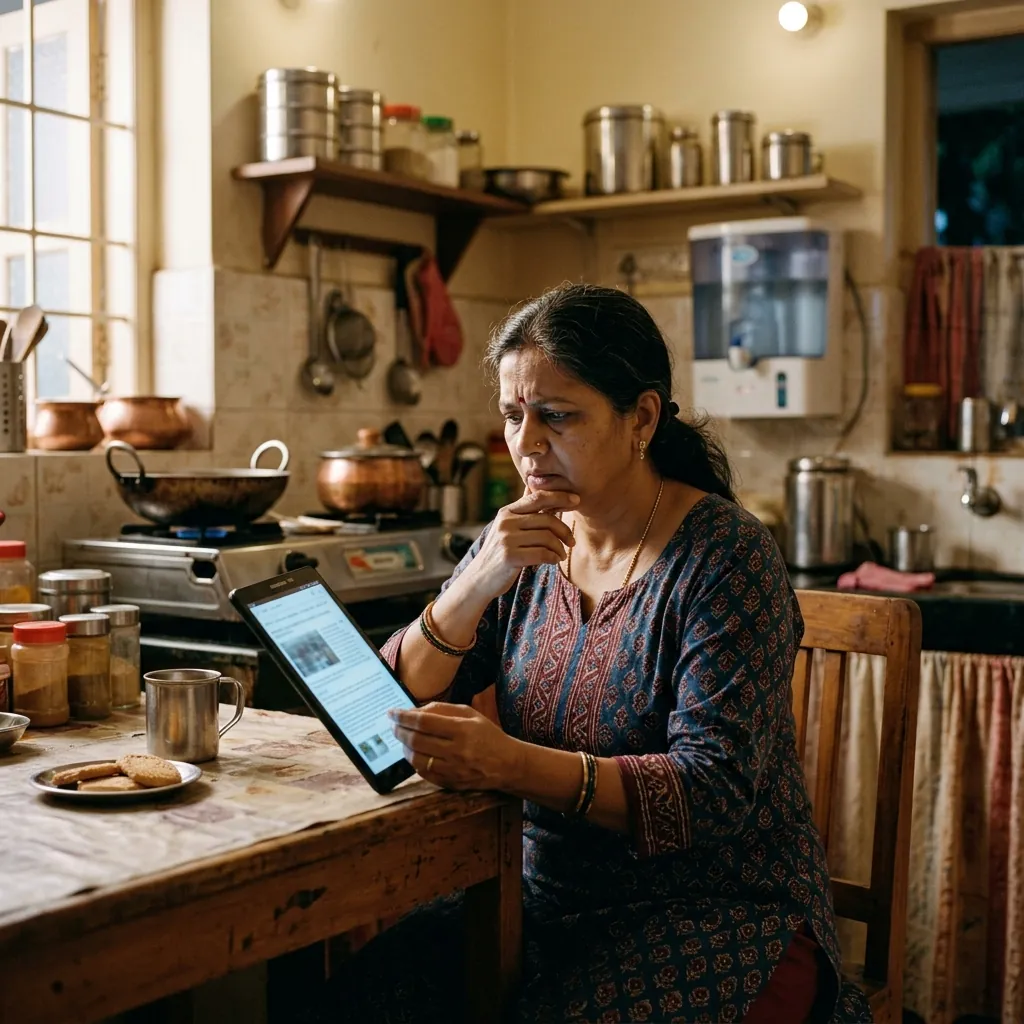
One innocent account. Eleven inappropriate ads in one week.
Deepa Sharma is a 42-year-old accounts manager at an IT firm in Bangalore. She's careful about her family's online safety—she uses strong passwords, teaches her daughter about strangers online, and thought she was doing everything right. Her 11-year-old daughter, Priya, needed a smartphone for school—WhatsApp for homework groups, Instagram to connect with schoolmates, YouTube for educational videos.
One Tuesday evening, Deepa was scrolling through Instagram when she noticed Priya's account left logged in on the family iPad. She opened it to log out. Instead, she saw something that froze her in place.
In Priya's Instagram Reels feed—the endless scroll of videos designed specifically for kids that age—between dance trends and cartoon clips, were advertisements featuring women in adult situations. Not just suggestive—explicit enough to make a parent gasp. Some ads linked to "channels" offering illegal content.
Deepa's first thought: "How did this happen? My 11-year-old has been seeing these?" Her second thought: "How many other children in India are seeing this right now?"
By the time she called Meta's support line, she'd discovered the ads had been appearing for a week. Nobody had flagged them. Instagram's "community standards" had apparently approved them.
What Just Happened? How Instagram Exposes Children
Deepa's experience isn't isolated. It's happening to millions of Indian children right now—and the systems designed to protect them have massive gaps. Here's how the exposure happens, step by step:
Child Creates Account (With False Age)
A child claims to be 18+ and creates an Instagram account in seconds. Age verification? Doesn't exist. Meta relies on self-reporting—which children bypass instantly. Instagram doesn't know the user's real age.
Algorithm Learns "Interests"
Within one day, Priya watched a few videos, liked some posts, and commented on trends. Instagram's AI immediately begins learning her "interests." The algorithm can't distinguish between what a child watches and what a child should watch.
Behavioral Targeting Begins
Within three days, Instagram's system has profiled her. It knows what she engages with, what makes her stop scrolling, what she clicks. It doesn't categorize her as a child—it just sees "user interest patterns." And then it starts serving ads.
Adult Ads Are Served Automatically
Instagram's ad network automatically matches available ads to user profiles. Ads for adult content, beauty products unsuitable for children, and worse are served—because the algorithm didn't flag her as a minor. No human reviewed the ad before it reached her.
Parents Discover Too Late
Most parents discover this by accident—like Deepa did. Or they don't discover it at all. By then, the child has been exposed to content for weeks or months.
What's Really Happening to Children Exposed to This Content

Exposure to adult content isn't just "uncomfortable." It creates psychological and physical threats that parents need to understand:
Grooming Gateway: Children exposed to adult content are more likely to accept inappropriate contact from strangers. When they've already seen explicit material, boundaries blur. In January 2025, a 12-year-old girl from Pune was groomed by a 34-year-old man on Instagram. He sent her ₹5,000 to "build trust" before attempting to arrange an in-person meeting. Police arrested him—but only because her mother discovered the messages by chance.
Mental Health Decline: Exposure to adult content + excessive screen time = anxiety, depression, poor academic performance, and sleep disruption. A 14-year-old's brain isn't developed enough to process sexual imagery. Constant exposure rewires reward systems and creates addiction pathways.
Financial Exploitation: Children are targeted with in-app purchase ads. A 14-year-old from Bangalore spent ₹1,87,000 (nearly $2,250 USD) from his father's linked UPI account on gaming currency in just 3 weeks—all through ads Instagram served him.
Why DPDP Act Isn't Enough (And Why Government Action Is Slow)
You might be thinking: "Isn't the DPDP Act supposed to protect children?" The answer is complicated.
India's Digital Personal Data Protection Act 2023 looks powerful on paper. It mandates parental consent before collecting child's data, prohibits behavioral tracking, and bans profiling of children. But in reality, it has critical gaps:
| Aspect | What DPDP Says | What Actually Happens |
|---|---|---|
| Age Verification | No mandate for robust verification | Children self-report age; no checks |
| Targeted Ads to Children | Prohibited | Platforms use loopholes; weak enforcement |
| Content Moderation | Not covered (IT Act's job) | Harmful content reaches children daily |
| Behavioral Tracking | Prohibited | Instagram profiles all users |
| Enforcement Timeline | Data Protection Board phased rollout | Real enforcement 2+ years away |
"DPDP Act is like putting a speed bump on a highway but not hiring police. The road is still dangerous."
— Legal analyst, Internet Freedom FoundationHow to Protect Your Child Right Now
Immediate Actions (Do These This Week)
1. Have the Honest Conversation
Sit down with your child and talk openly. Tell them: "I'm not spying on you, but I want to understand what you're seeing. Some apps show inappropriate content by accident. If you see something uncomfortable, you won't get in trouble." Children who trust their parents are far more likely to report problems.
2. Review Privacy Settings Together
Make it a team activity: set accounts to private, limit who can comment or message, disable "Suggestions for You" (which reduces algorithmic targeting), turn off location sharing, and delete posts that reveal personal details.
3. Take Screenshots of Inappropriate Content
If your child sees adult ads or content, screenshot it immediately showing date, time, and content. Report it directly to Instagram and file a complaint at cybercrime.gov.in.
4. Set Time Limits
Utilize built-in screen time tools (Apple Family Sharing, Google Family Link) to limit daily app usage, block websites, and schedule device downtime before bed.
Medium-Term Actions (Next 2–4 Weeks)
- Install a Parental Monitoring App: Use tools like Qustodio to monitor activity patterns, restrict screen time, and trigger alerts on concerning search queries or contacts.
- Create a Family Media Plan: Establish concrete agreements regarding app time, phone-free meals, and device-free hours before sleep.
- Teach Digital Literacy: Educate children on how ad networks work, advertising psychology, data privacy, and digital stranger danger.
Your Quick-Action Checklist
Do These Right Now (Next 24 Hours)
Review your child's Instagram feed and check their notifications
Check installed apps and their associated permissions
Ask: "Have you seen anything online that made you uncomfortable?"
Enable basic device screen time limits
Schedule for This Week
Have a deep conversation about online safety and trust
Lock down settings on all active accounts
Configure Google Family Link / Apple Family sharing
Research your school's digital safety policy
You Can't Protect What You Don't See—But You Can Change That
Deepa's story could have ended in a crisis. Instead, by proactively checking her daughter's iPad, she identified the threat early, filed complaints with the proper authorities, and established a foundation of digital safety and trust with Priya.
Your child will face social media whether you like it or not—it is part of growing up in 2026. But you don't have to leave them defenseless. The laws might not be perfect yet, but your parenting can be. Start with one action today. Check your child's Instagram feed. That single action could prevent a crisis.
Share This Knowledge
Know other parents or teachers struggling with child safety on social media? Share this article. The more families who understand these threats, the safer our children become.
✉ Reach Out to Me